
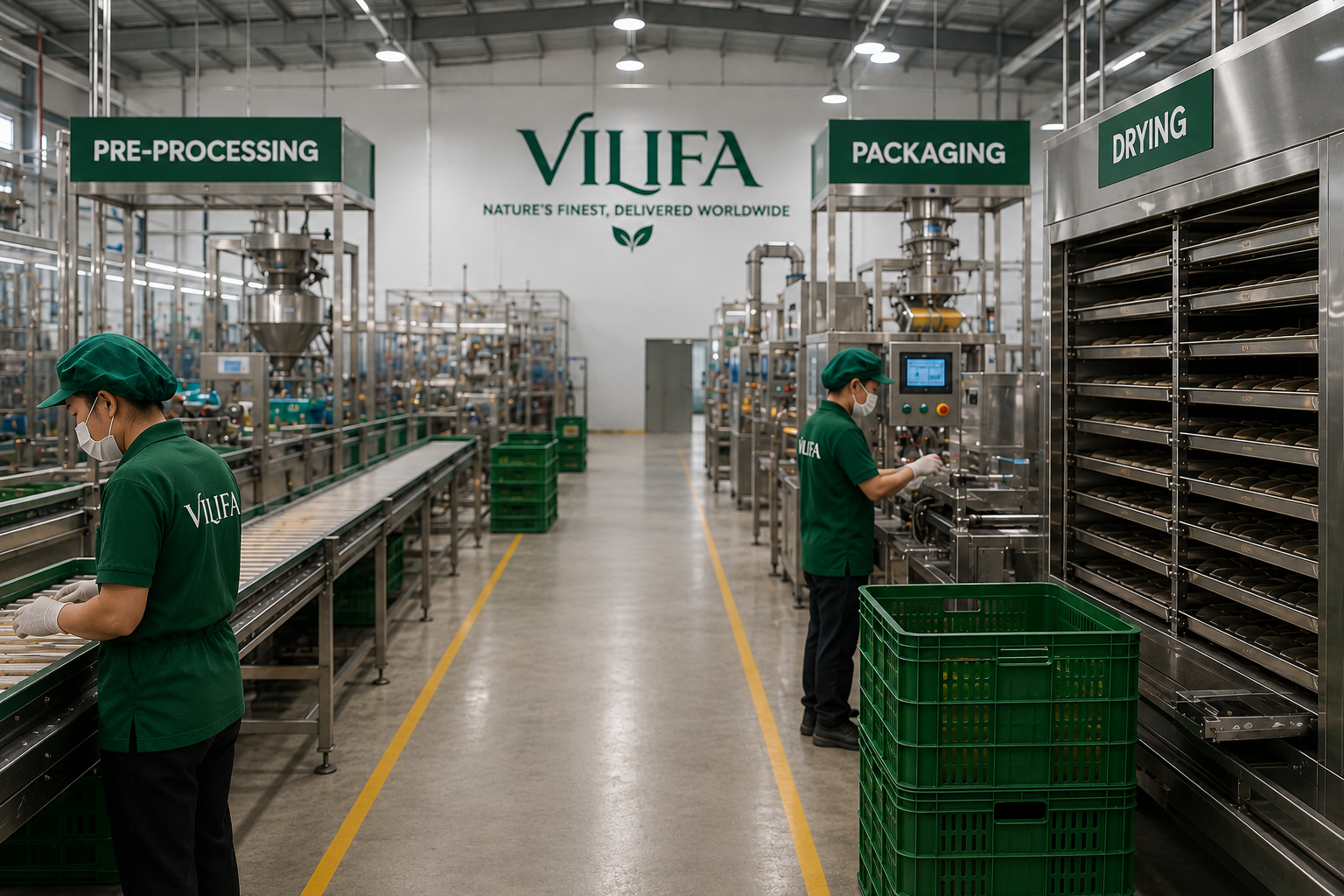

When purchasing frozen fruit for export, price and visual quality are only part of the decision. Importers also need to review the technical, regulatory and logistics documents that support each shipment.
An unclear specification, a COA that does not match the actual lot, or incomplete temperature records can create problems when checking product quality, resolving claims or completing import procedures.
This frozen fruit export documents checklist focuses on five key areas:
Product Specification → COA → Certifications → Traceability → Cold Chain
Commercial shipping documents and lot identification details should also be checked carefully before the shipment is confirmed.
Note: Requirements may vary depending on the importing country, fruit type, level of processing and the requirements of the final customer. Buyers should confirm the applicable rules before placing an order.
Why Should Buyers Check Documents Before Purchasing Frozen Fruit for Export?
Frozen fruit usually passes through several stages before reaching the importer:
harvesting → processing → freezing → packing → cold storage → transportation.
A mismatch at any stage can create risk for the buyer.
For example, the same frozen mango may be supplied in different formats depending on the application. A beverage manufacturer may require diced mango, while a retail packer may need slices or chunks within a defined size tolerance.
Common risks include:
- Specification mismatch: cut size, format or defect rate differs from the agreed requirement.
- Limited evidence in a claim: the specification or COA does not clearly define the agreed standard.
- Cold-chain deviation: temperature fluctuations affect texture, color or quality after thawing.
- Document inconsistencies: product name, lot number or quantity differs between documents.
For this reason, buyers should review the documentation before signing the contract or issuing a Purchase Order rather than relying only on catalogues or initial samples.
1. Product Specification: What Should Frozen Fruit Meet?
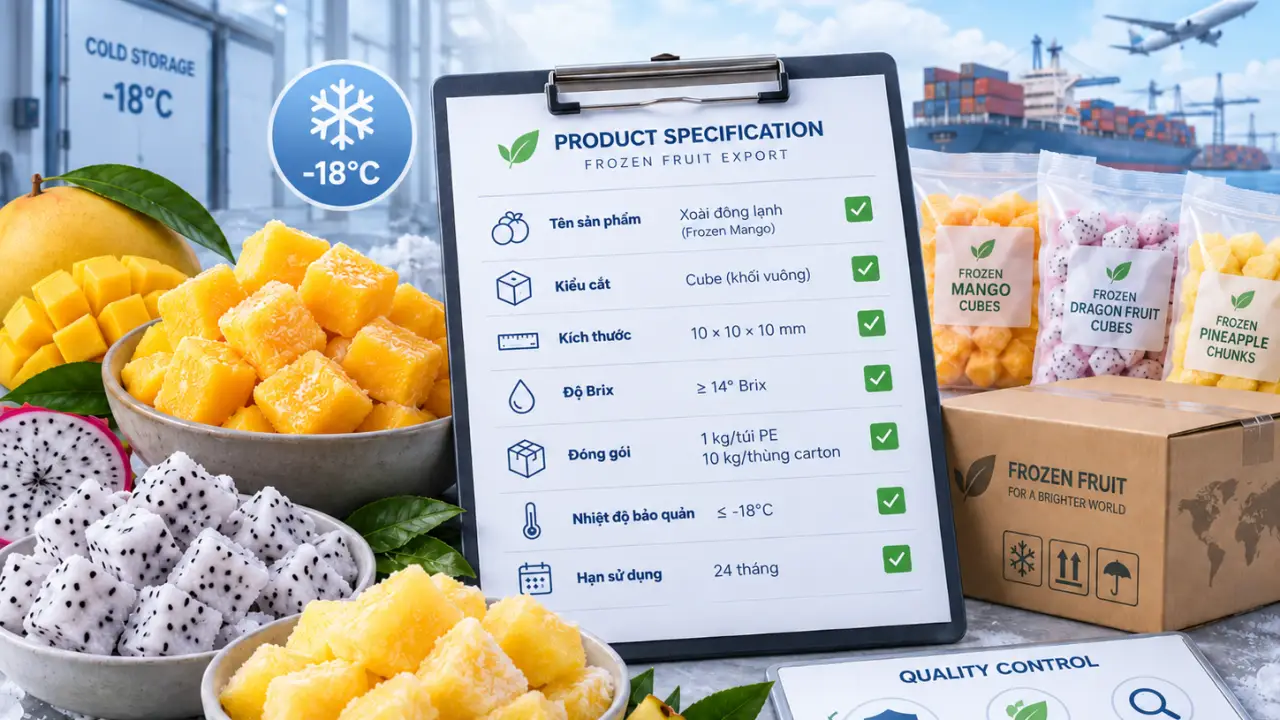
A Product Specification, commonly called a Spec, defines the technical requirements agreed between the buyer and supplier.
In simple terms:
The Spec explains what the product is expected to meet.
For frozen fruit export orders, this document provides the basis for comparing the delivered product with the requirements agreed before production.
What Should a Frozen Fruit Specification Include?
Depending on the product and intended application, the Spec may include:
- Product name and processing format: IQF mango cubes, frozen durian pulp, diced jackfruit, slices, chunks or puree
- Variety and origin: when relevant
- Size and tolerance: piece dimensions and acceptable variation
- Defect rate: broken pieces, discoloration, peel or seed residues
- Physicochemical parameters: Brix, moisture or pH when applicable
- Sensory characteristics: color, aroma, flavor and texture after thawing
- Ingredients: added sugar, antioxidants or other ingredients if used
- Packaging: inner bag, outer carton and net weight
- Label requirements
- Storage temperature
- Shelf life
If appearance is commercially important, the buyer and supplier may also agree on reference photos or an approved sample.
Common Specification Mistakes
Specifications should avoid vague descriptions such as:
“good color,” “ripe fruit” or “high quality.”
These terms are difficult to measure when a disagreement occurs.
Common issues include:
- No size tolerance
- No acceptable defect rate
- Ingredients not clearly stated
- No revision number or effective date
- Supplier and buyer using different versions
- Specification conflicting with the sales contract
A useful Spec should be measurable, verifiable and clearly agreed by both parties.
2. COA: Checking the Correct Shipment Lot
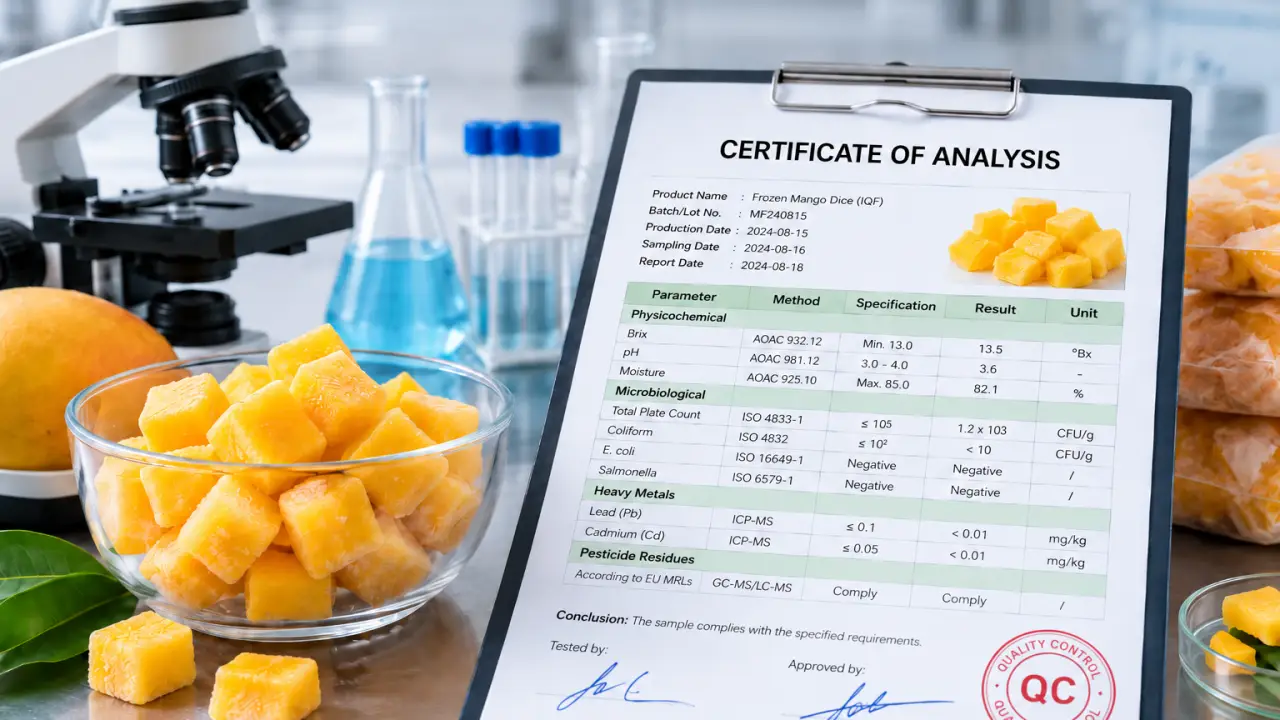
A Certificate of Analysis (COA) provides analytical results for a product or shipment lot.
If the Spec answers:
“What should the product meet?”
the COA helps answer:
“What were the analytical results for this lot?”
COA requirements are not identical across every country or customer. However, in B2B transactions, buyers commonly use COAs to verify agreed quality parameters.
What May Be Included in a Frozen Fruit COA?
| Category | Examples |
|---|---|
| Physicochemical | Brix, moisture, pH, acidity |
| Microbiological | Total plate count, Coliform, E. coli, Salmonella, Listeria where applicable |
| Heavy metals | Lead, Cadmium or other required parameters |
| Residues | Pesticide residues according to destination-market requirements |
| Other | Additives or product-specific parameters |
The exact testing scope should be determined according to the product, contract and destination market.
How Should Buyers Review a COA?
Do not check only whether the result says “Pass.”
Review:
- Product name
- Batch/Lot Number
- Production date
- Sampling date, if available
- Testing date
- Test method
- Specification or acceptance limit
- Actual result
- Testing laboratory or issuing party
The lot number on the COA should be traceable to the actual product and relevant shipment records.
If third-party testing is required, buyers may also verify whether the laboratory has the appropriate scope of competence or accreditation for the relevant test methods.
A COA from a previous shipment should not automatically be treated as evidence for the current lot.
3. Certifications and Export Documents
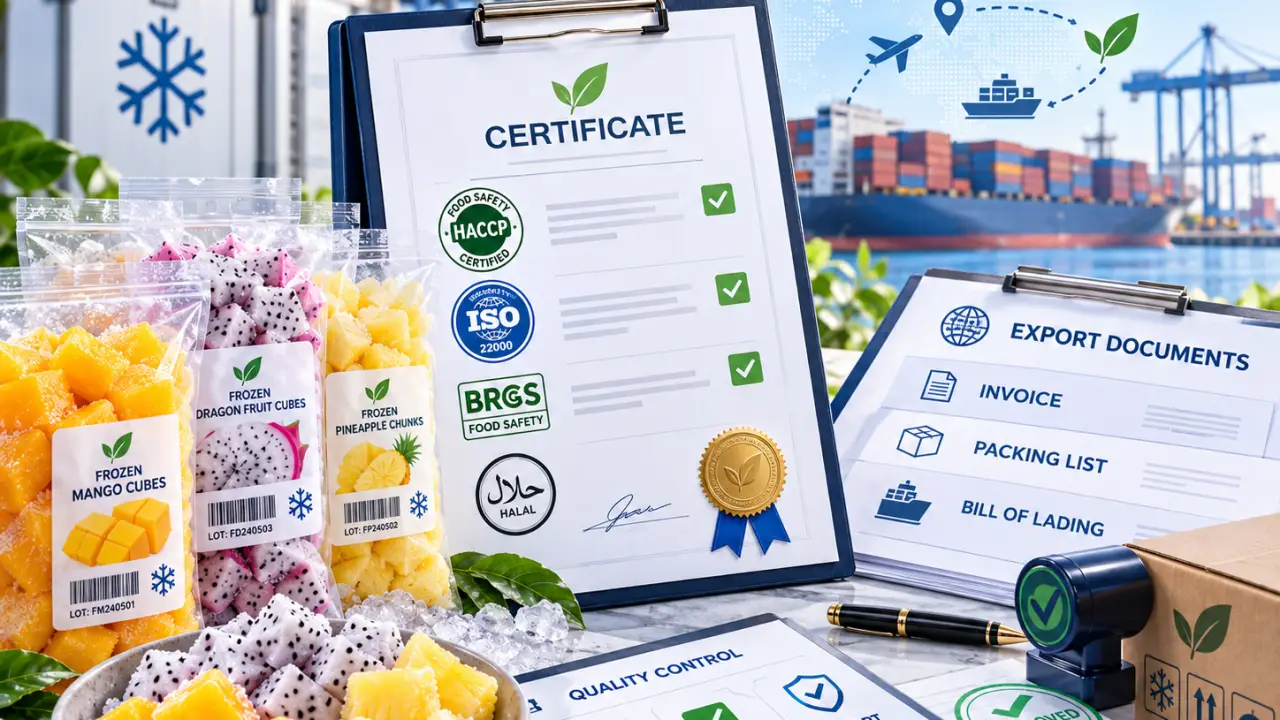
Buyers should distinguish between: factory or management-system certifications and documents issued or prepared for an individual shipment.
These are not the same.
Factory and Supply-Chain Certifications
Depending on the buyer, product and destination market, relevant systems or certifications may include:
- HACCP
- ISO 22000
- FSSC 22000
- BRCGS
- IFS
- GlobalG.A.P. or VietGAP for agricultural sourcing where applicable
- Halal
- Kosher
- Organic certification
- Other customer-specific social or compliance programs
When reviewing a certificate, buyers should check:
- Legal entity name
- Factory address
- Certification scope
- Whether frozen fruit is included
- Certification body
- Issue and expiry dates
A certification logo on a website or brochure should not be the only basis for verification.
For Halal, Kosher or Organic products, requirements may also depend on the specific market and customer.
Commercial and Export Documents
Depending on the shipment, documents may include:
- Sales Contract
- Commercial Invoice
- Packing List
- Bill of Lading
- Certificate of Origin (C/O)
- Phytosanitary Certificate, where applicable
- Health Certificate, where required
Wooden pallets may also need to comply with ISPM 15 requirements.
The required documentation should always be confirmed according to the importing country and product classification.
Market-Specific Considerations
Requirements can differ significantly between markets.
United States
Buyers may need to consider food-facility registration requirements, importer responsibilities such as FSVP and applicable FSMA traceability requirements.
European Union and United Kingdom
Important areas may include pesticide MRLs, microbiological criteria, contaminants and labeling requirements. Some retailers may also require standards such as BRCGS or IFS.
China
Certain product categories may require overseas manufacturer registration and Chinese-language labeling requirements.
Japan and South Korea
Buyers should check local pesticide-residue lists, labeling requirements and permitted additives.
Because regulations change, buyers should confirm current requirements with the relevant authority, importer or compliance specialist before shipment.
4. Frozen Fruit Traceability
Traceability allows the buyer to follow a finished carton back to the corresponding production lot and, where relevant, the raw-material source.
A traceability system may include:
- Batch/Lot Number: a unique identifier for each lot
- Raw-material records: supplier or growing-area information where applicable
- Receiving records: date, quantity and incoming inspection
- Production records: processing, freezing and packing information
- Testing records: analytical results connected to the lot
- Storage records
The Lot Number should appear consistently across the product label, COA and relevant documentation.
For a new supplier, buyers may also request a mock traceability exercise to determine how quickly the supplier can trace a sample lot through its records.
5. Cold Chain for Frozen Fruit Export

For frozen fruit export, cold-chain control helps maintain product condition from freezing through storage, transport and delivery.
Temperature fluctuations during the journey may affect texture, color and product quality after thawing.
Storage Temperature
Frozen fruit is commonly stored and transported at around -18°C or below.
Some products or contracts may require a lower temperature.
The required temperature should therefore be stated clearly in the product specification and contract rather than assumed. Buyers may also refer to the Codex Code of Practice for the Processing and Handling of Quick Frozen Foods for internationally recognized guidance on frozen-food handling and cold-chain management.
Cold-Chain Records Buyers May Check
| Stage | Records or information to review |
|---|---|
| After freezing | Freezing record and product temperature |
| Cold storage | Warehouse temperature records |
| Before loading | Container inspection records where applicable |
| During transport | Data logger or remote temperature-monitoring records |
| On arrival | Product temperature and receiving inspection |
One important distinction is:
Reefer set point is not the same as actual product temperature.
The set point shows the temperature programmed into the reefer container. Logger data or direct product-temperature measurements provide additional information about actual shipment conditions.
Common Cold-Chain Issues
Product not sufficiently frozen before loading
If frozen fruit is loaded before reaching the required temperature, the risk of temperature deviation increases from the beginning of the journey.
No temperature data
If a quality issue occurs without data-logger or temperature records, determining the cause can be much more difficult.
Extended dwell time
Unexpected delays at ports or transshipment points may increase operational risk and additional costs.
Possible Signs of Temperature Abuse
When receiving frozen fruit, buyers may look for:
- Large ice crystals
- Product frozen together in large blocks
- Moisture or condensation inside the packaging
- Damaged or deformed cartons
- Abnormal discoloration
- Unusual odor
- Missing or incomplete logger data
These signs alone may not prove that the product was thawed and refrozen, so they should be assessed together with temperature records and inspection data.
6. Three-Stage Frozen Fruit Export Document Verification
Before Signing the Contract
Buyers may request:
- Product Specification
- Relevant certificates
- Recent or sample COA where appropriate
- Packaging specification
- Traceability information
- Relevant factory information
The objective is to determine whether the supplier can meet the buyer’s requirements before an order is confirmed.
Before Shipment
Review:
- Final Product Specification
- Lot-specific COA where applicable
- Commercial Invoice
- Packing List
- Batch/Lot Number
- Container Number
- Seal Number
- Destination-market documents
- Cold-chain plan
Product name, lot number, quantity, weight and package count should be checked for consistency across the relevant documents.
For large first orders or new suppliers, buyers may also consider a pre-shipment inspection.
Upon Arrival
Buyers may check:
- Container seal
- Container condition
- Packaging
- Batch/Lot Number
- Product appearance
- Product temperature
- Data-logger records where available
If an abnormality is detected, supporting documents, photos and temperature data should be retained for further assessment or claims handling.
7. Common Frozen Fruit Export Documentation Mistakes
Buyers should pay particular attention to:
- Product names that differ between documents
- COA without a Batch/Lot Number
- COA that cannot be linked to the shipment
- Expired certifications
- Certification scope that does not cover the relevant product
- Missing destination-market documents
- No temperature records
- Quantity or weight discrepancies between shipping documents
Identifying these issues before shipment is generally easier than resolving them after the container reaches the destination port.
Frozen Fruit Export Documents Checklist
| Area | What to Check |
|---|---|
| Product Specification | Product name, cut, size, tolerance, quality, packaging, storage |
| COA | Lot Number, test method, acceptance limit and results |
| Certifications | Scope, facility, validity and certification body |
| Traceability | Lot Number, raw materials and production records |
| Cold Chain | Storage, loading, transport and receiving temperatures |
| Commercial Documents | Invoice, Packing List, Bill of Lading |
| Export Documents | C/O, Phytosanitary Certificate, Health Certificate where applicable |
The key principle is consistency:
Product name, Batch/Lot Number, production date, weight and package count should match across the relevant records.
Frequently Asked Questions
What documents should I request when buying frozen fruit for export?
Depending on the product and destination market, buyers may need to review the Product Specification, COA, relevant certifications, traceability records, commercial documents and cold-chain information.
The exact documentation should be agreed with the supplier before the order is confirmed.
Is a COA mandatory for every frozen fruit shipment?
A COA should not be assumed to be a universal legal requirement for every market and product.
However, B2B buyers commonly request a COA to verify agreed quality parameters.
Does frozen fruit require a Phytosanitary Certificate?
This depends on the product, level of processing and destination-country requirements.
Buyers should confirm the requirement with the importer or relevant authority before shipment.
What is the standard storage temperature for frozen fruit?
Many frozen-fruit products are stored at -18°C or below, but the actual requirement should follow the agreed Product Specification.
Conclusion
When purchasing frozen fruit for export, buyers should evaluate more than price and product samples.
The accompanying documentation helps show how the product was specified, tested, traced and maintained throughout the supply chain.
A simple way to understand the process is:
Product Specification defines what the product should meet → COA shows analytical results → certifications support supplier and system evaluation → traceability connects the product to the correct lot → cold-chain records help verify storage and transport conditions.
Reviewing these elements from the RFQ stage helps buyers communicate requirements more clearly and provides a stronger basis for handling issues if they arise.
If your company is looking for frozen fruit for export from Vietnam, send VILIFA your product type, cut format, packaging requirements, expected quantity, destination market and required documentation so the team can review supply feasibility.
Contact VILIFA to discuss Product Specifications, quality documents, packaging requirements and export documentation for your frozen fruit orders.