


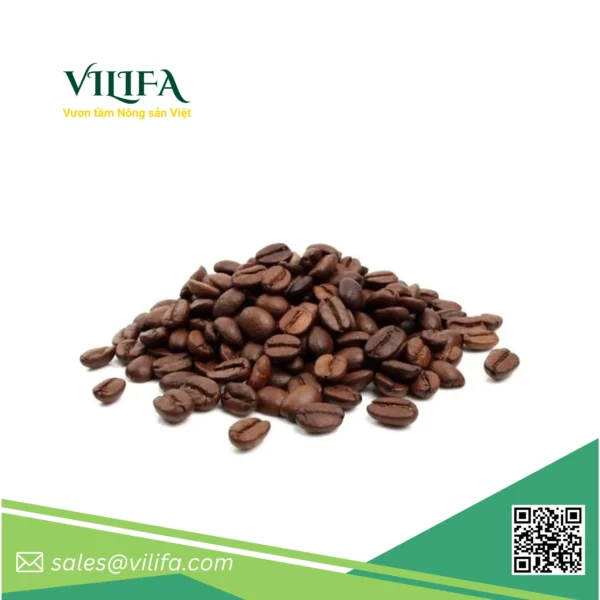
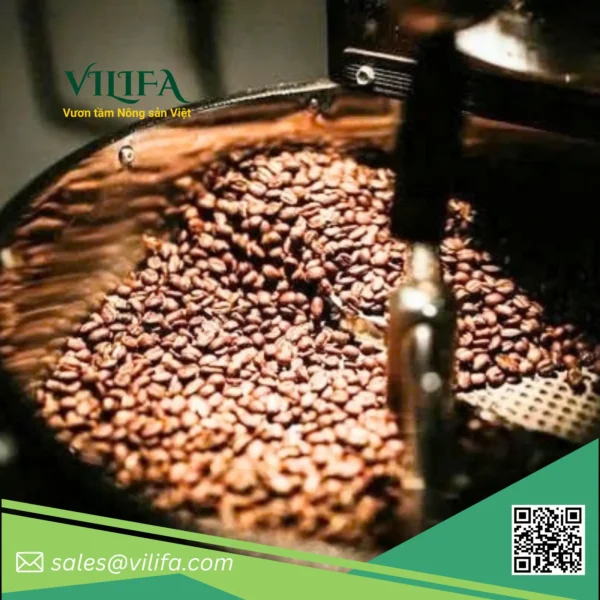
Natural roasted coffee beans are suitable for coffee shops, restaurants, hotels, and distributors looking for a flexible coffee supply for different brewing methods. The beans are kept whole after roasting, allowing users to choose the appropriate grind size for Vietnamese phin filters, espresso machines, or other brewing methods.
VILIFA supplies roasted coffee beans and Vietnamese coffee for export for business, foodservice, and distribution needs. Depending on each order, customers can discuss coffee varieties, roast levels, packaging specifications, and required quantities.
What Are Natural Roasted Coffee Beans?
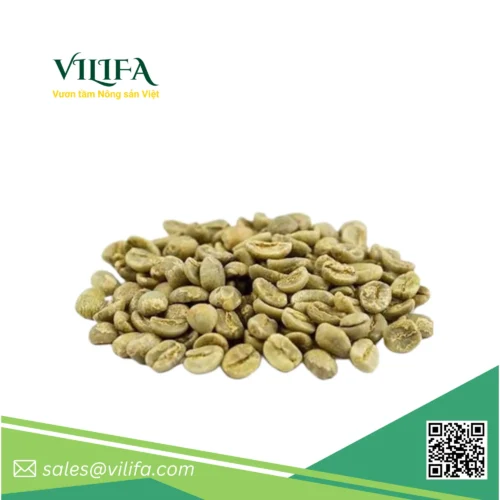
Natural roasted coffee beans are green coffee beans roasted without added flavorings or other ingredients intended to alter aroma or taste during the roasting process. After roasting, the coffee can be kept as whole beans or ground according to the intended use.
“Natural roasted” and “whole bean” refer to two different characteristics. Natural roasted describes coffee roasted without added flavoring ingredients, while whole bean refers to the physical form of the coffee after roasting. Therefore, naturally roasted coffee can still be ground before brewing.
If the product contains only coffee without other blended ingredients, it may also be described as pure coffee. However, the exact composition should always be confirmed for each specific product.
What Is the Difference Between Whole Bean and Pre-Ground Coffee?
Whole coffee beans have less surface area exposed to air than ground coffee. Users can grind only the amount needed before each brew and easily adjust the grind size according to the brewing equipment.
Pre-ground coffee is more convenient for users who do not have a grinder or need to reduce preparation time. However, the grind size must match the brewing method, and the remaining coffee should be stored properly after opening.
For coffee shops or businesses with higher consumption volumes, whole bean coffee provides greater flexibility for adjusting recipes and calibrating brewing equipment.
Common Types of Natural Roasted Coffee Beans
Natural roasted coffee beans are commonly classified according to coffee variety and roast level.
Classification by Coffee Variety
Natural roasted Robusta coffee generally contains more caffeine than Arabica and tends to have a more pronounced bitterness and stronger body. Actual flavor depends on the coffee variety, bean quality, processing method, and roast level. Robusta can be used for Vietnamese phin coffee, espresso, or milk-based coffee drinks.
Natural roasted Arabica coffee generally offers a wider range of aromas and a more noticeable acidity. Depending on the coffee, flavor notes may include fruit, floral, nutty, or chocolate characteristics. Arabica is suitable for pour over, cold brew, espresso, and many other brewing methods.
Arabica and Robusta can also be blended together. The blending ratio may be adjusted to balance body, aroma, mouthfeel, flavor intensity, and ingredient cost.
Classification by Roast Level
Light roast: Beans are light brown in color, with more of the original characteristics of the coffee and natural acidity remaining noticeable. Light roasts are commonly used for filter brewing methods.
Medium roast: Beans have a medium-brown color and generally offer a more balanced profile between origin characteristics and roast-developed flavors. Medium-roasted coffee may be used for phin brewing, espresso, or filter coffee depending on the recipe.
Dark roast: Beans are darker brown, with more pronounced roasted flavors and bitterness. Dark roasts are commonly used for milk coffee, Vietnamese phin coffee, and certain espresso recipes.
There is no single roast level that is suitable for every application. The final choice should be based on sample testing, brewing equipment, and the desired flavor profile.
Characteristics and Flavor of Natural Roasted Coffee
The quality of naturally roasted coffee is influenced by the raw material, processing method, roasting process, and storage conditions. For this reason, coffee quality should not be judged solely by bean color or one sensory characteristic.
Aroma: Aroma varies depending on the coffee variety and roast level. Properly stored coffee should not have moldy, unusually burnt, or foreign odors.
Color: Naturally roasted coffee beans can range from light brown to dark brown. A darker or lighter color alone does not determine quality.
Bean condition: Beans should be dry and free from visible mold or foreign matter. For commercial orders, factors such as broken bean percentage and other physical specifications should be agreed upon in advance.
Flavor after brewing: Coffee should be evaluated under suitable brewing conditions to assess body, acidity, aftertaste, and balance. For espresso, crema is only one sensory characteristic and should not be used as the sole indicator of coffee quality.
Coffee Processing and Roasting Process
The general process usually includes green coffee processing, roasting, cooling, inspection, and packaging.
Green Coffee Processing
Common coffee processing methods include:
- Natural process: Coffee cherries are dried before the outer layers are removed.
- Washed process: The skin is removed, the mucilage is processed, and the beans are then dried.
- Honey process: Part of the mucilage remains on the beans during drying.
Each processing method can influence the final flavor profile, although final quality also depends on the raw material and process control at each stage.
Roasting, Cooling, and Inspection
After green coffee beans are selected and cleaned, they are roasted according to an appropriate roasting profile. The roasting process develops the color, aroma, and flavor characteristics of the coffee.
After roasting, the beans are cooled, inspected, and packaged. Common evaluation criteria may include color, roast uniformity, defect rate, and cupping results.
Packaging should help limit exposure to air and moisture. Some coffee bags use one-way degassing valves to allow gases released after roasting to escape.
Robusta vs. Arabica Natural Roasted Coffee
| Criteria | Natural Roasted Robusta | Natural Roasted Arabica |
|---|---|---|
| Caffeine content | Generally higher | Generally lower |
| Bitterness | Usually more pronounced | Usually milder |
| Acidity | May be lower depending on origin and roast | Typically has more noticeable acidity |
| Mouthfeel | Can be fuller and heavier | Can range from light to full-bodied |
| Aroma | May show nutty, chocolate, or fruity notes | Often more aromatic, with floral, fruity, nutty, or chocolate notes |
The choice between Robusta and Arabica should depend on the intended application and customer preference. Arabica should not automatically be considered higher quality, and Robusta should not be viewed as suitable only for strong coffee styles.
How to Store Natural Roasted Coffee Beans
Natural roasted coffee beans should be stored in sealed packaging in a cool, dry place away from direct sunlight, heat sources, and strongly scented foods.
After opening the bag, take only the amount needed and reseal the remaining coffee carefully. Coffee shops using grinders should grind coffee as needed rather than preparing large quantities in advance in order to reduce aroma loss.
Shelf life should follow the information provided on the label and the manufacturer’s instructions. If coffee is refrigerated or frozen, suitable packaging and handling methods should be used to prevent moisture, condensation, and odor absorption.
How to Brew Natural Roasted Coffee Beans
Vietnamese Phin Brewing
The grind size should be suitable for the type of phin filter being used.
After adding ground coffee to the filter, pour in a small amount of hot water to evenly wet the coffee bed. Allow the coffee to bloom fully before adding the remaining water.
The dripping speed and final strength can be adjusted through three main factors:
- Grind size
- Coffee dosage
- Compression or tamping pressure
Espresso
For espresso, coffee beans are usually ground finely.
A practical starting point is approximately 18–20 g of coffee for a double shot, with an extraction time of around 25–30 seconds, then adjusted according to the machine, grinder, and coffee used.
Robusta often produces a stronger flavor and more crema, while Arabica may provide a wider range of aromatic characteristics.
Pour Over
Pour over is commonly used with light- or medium-roasted Arabica.
A medium-coarse grind can be used as a starting point, with a coffee-to-water ratio of approximately 1:15 and water temperature around 90–96°C.
Water should be poured evenly in several stages to better control extraction.
Cold Brew
Cold brew is prepared by steeping ground coffee in water at a low temperature for several hours before filtering.
A relatively coarse grind is generally easier to work with. The coffee-to-water ratio and steeping time should be adjusted according to the coffee variety, roast level, and desired flavor.
What Affects the Price of Natural Roasted Coffee Beans?
The price of roasted coffee beans may vary depending on:
- Coffee variety
- Bean quality
- Processing method
- Roast level
- Packaging specifications
- Order quantity
- Testing requirements
- Delivery requirements
For wholesale buyers, products should be compared based on similar standards and specifications rather than price alone.
A lower-priced coffee may not necessarily be the better option if its quality is inconsistent or does not match the intended brewing recipe.
When requesting a quotation for natural roasted coffee beans, businesses should provide information such as:
- Coffee type
- Intended use
- Roast level
- Packaging requirements
- Estimated quantity
- Delivery location
Where to Buy Natural Roasted Coffee Beans
When sourcing natural roasted coffee beans, businesses should consider raw material quality, consistency between batches, supply capacity, and the supplier’s level of support.
VILIFA supplies natural roasted coffee beans for foodservice, business, and distribution needs. Coffee varieties, roast levels, packaging specifications, and order quantities can be discussed according to each customer’s requirements.
Conclusion
Natural roasted coffee beans are suitable for both individual users and businesses that want greater control over grind size, brewing method, and the final flavor profile.
Whether used for Vietnamese phin coffee, espresso, pour over, or cold brew, the final result depends on the coffee variety, roast level, storage conditions, and brewing recipe.
For coffee shops, businesses, and distributors looking for a reliable supply of roasted coffee beans, customers can discuss coffee varieties, roast levels, packaging specifications, and expected order quantities with VILIFA to identify a suitable option.
Contact VILIFA for consultation and a quotation based on your specific requirements.

Reviews
There are no reviews yet.