


Many people believe that the darker, more aromatic, and more bitter coffee is, the more “authentic” it must be. In reality, all three characteristics can also be created by over-roasting the beans, adding flavorings, or mixing coffee with other ingredients. If you rely only on appearance, aroma, and taste, it can be easy to confuse pure coffee with products blended with corn, soybeans, or other grains.
For café owners or businesses buying in bulk, knowing how to identify pure roasted coffee is an important part of incoming quality control. However, no single sign is enough on its own. Ground coffee color, aroma, texture, brewed color, and aftertaste are only useful when assessed together with the ingredient list, manufacturer information, and origin of the coffee. For a more systematic approach to coffee evaluation, buyers can refer to the Coffee Value Assessment by the Specialty Coffee Association (SCA), which evaluates coffee through multiple dimensions, including physical characteristics, flavor, aftertaste, origin, and traceability information.
Quick Summary
- Pure roasted and ground coffee usually has a natural aroma, a relatively loose texture, color that varies depending on roast level, and flavors characteristic of the coffee variety when brewed.
- Adulterated coffee may show signs such as an unusually strong aroma, heavy or sticky grounds, cloudy brewed coffee, or an unusual aftertaste.
- No visual or sensory test is 100% accurate on its own. Sensory observations should be combined with checks of the ingredient list, manufacturer, roast date, and coffee origin.
What Is Pure Roasted Coffee?
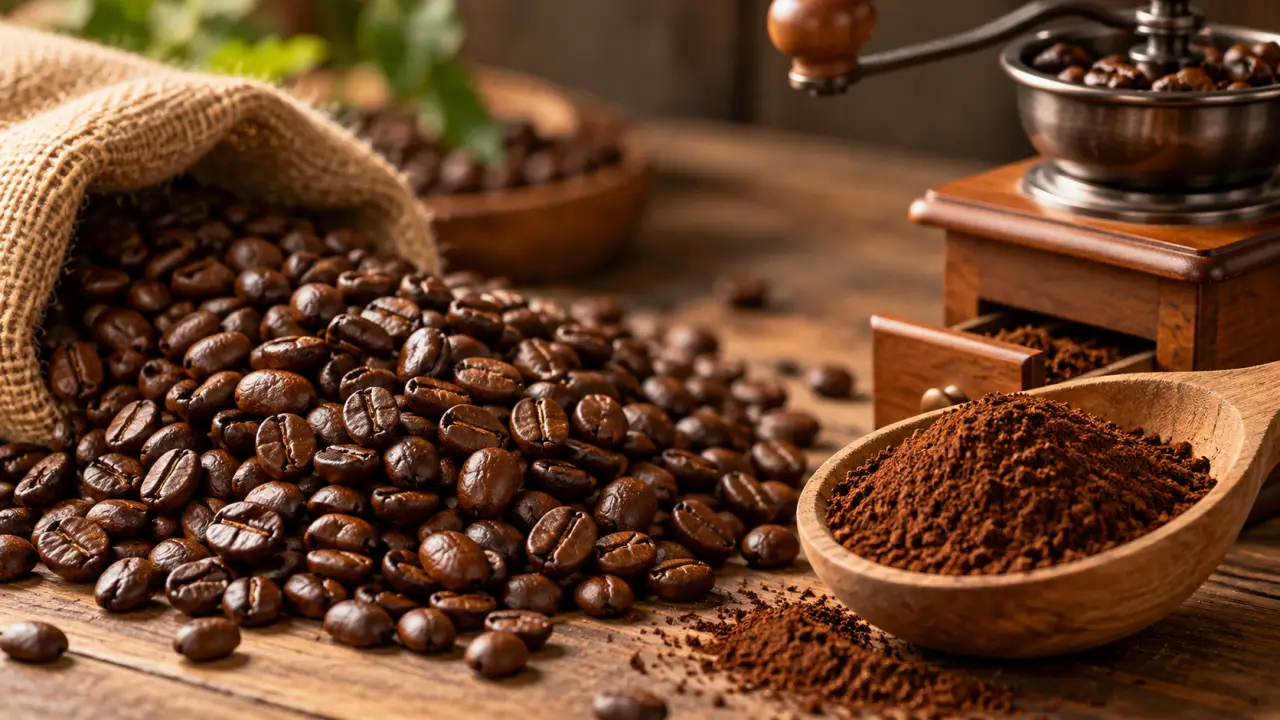
Pure roasted and ground coffee is coffee made entirely from coffee beans that are roasted and ground without the addition of corn, soybeans, grains, or any other non-coffee ingredients.
“Pure” does not mean “made from only one type of bean.” A product can still be considered 100% pure coffee if it contains:
- 100% Robusta
- 100% Arabica
- A blend of Robusta and Arabica
- A blend of coffees from different growing regions or different bean lots
As long as every ingredient is coffee, the product is still pure coffee.
How is blending different from adulteration? Blending is when a roaster or supplier intentionally combines different coffee beans to create a targeted flavor profile, with the composition usually disclosed clearly. Adulteration means adding non-coffee ingredients without disclosing them to the buyer.
6 Ways to Tell Pure Coffee from Adulterated Coffee
1. Look at the Color and Texture of the Grounds
The color of ground coffee depends mainly on the coffee variety and roast level. A medium roast generally produces a lighter brown color, while a darker roast results in deeper brown tones. For this reason, avoid rigid rules such as “pure coffee must always have a reddish-brown color.”
Pay more attention to the texture of the grounds. Pure roasted coffee is generally light and relatively loose after grinding. If the grounds feel damp, sticky, clumped together, or unusually black, further checking may be necessary.
However, do not jump to conclusions too quickly, as very dark grounds may simply come from a darker roast. Color should therefore be treated only as an initial observation when identifying pure roasted coffee, not as conclusive evidence.
2. Smell the Coffee Before Brewing
This is one of the simplest checks and can be done by almost anyone. Depending on the bean variety and roasting method, pure ground coffee may show aroma notes such as cocoa, chocolate, caramel, roasted nuts, wood, or fruit.
Natural coffee aroma is often layered and changes gradually over time. By contrast, if a freshly opened bag immediately gives off an unusually intense or overly sweet aroma, check the ingredient list carefully to see whether flavorings have been added.
One additional point: dark-roasted coffee beans may release natural oils onto their surface after some time in storage. Therefore, shiny or oily beans do not automatically mean that butter or other additives have been used.
When evaluating pure roasted coffee, consider not only aroma intensity but also how natural the aroma feels and how it develops over time.
3. Check the Texture and Volume of the Grounds
Coffee beans develop a porous structure during roasting, so ground coffee is generally loose and relatively light.
Corn and soybeans have different structures. When mixed into coffee, they may make the grounds feel heavier, denser, or more prone to sticking together.
One common test is to compare two samples of the same weight and observe their volume. A noticeable difference may suggest differences in composition.
However, grind size, roast level, and moisture content can all affect volume, so this method should only be used as a reference rather than definitive proof.
4. Brew the Coffee and Observe the Liquid
Brewing is more useful for evaluating pure roasted coffee than simply examining dry grounds.
Observe the Brewed Color
The color of pure roasted coffee can range from brown to dark brown depending on the bean variety, roast level, coffee-to-water ratio, and brewing method.
A dark-roasted coffee can naturally produce a very dark brew. Therefore, black coffee does not automatically indicate adulteration.
What matters more is the combination of color, clarity, aroma, and taste. If the brewed coffee is unusually cloudy, has an unusual smell, or leaves an abnormal aftertaste, the product source should be checked more carefully.
Check the Body and Thickness
Many people assume that thicker coffee is better coffee, but this is not an accurate quality standard.
Pure coffee is generally not syrup-like under normal brewing conditions. However, perceived thickness also depends on the coffee dose, grind size, extraction method, and roast level.
If the drink is unusually thick compared with the café’s normal brewing recipe, it may be worth investigating further, but this alone is not enough to conclude that corn or soybeans have been added.
Observe the Foam
Foam is also not an absolute indicator.
The amount of foam can vary depending on bean freshness, the amount of CO₂ remaining after roasting, the way water is poured, and the brewing method.
Therefore, statements such as “less foam means pure coffee” or “more foam means adulterated coffee” are overly simplistic.
5. Taste the Aftertaste
Flavor is an important indicator, but it also needs to be evaluated in the right context. With pure roasted coffee, the aftertaste varies depending on the bean variety, roast level, and brewing method.
Robusta generally has a fuller body, stronger bitterness, and lower perceived acidity. Arabica usually offers a wider range of aromas and more noticeable perceived acidity.
A well-roasted and properly brewed coffee generally has a relatively clear flavor structure and a clean, pleasant aftertaste without leaving excessive harshness or a lingering cloying sensation.
If the coffee tastes excessively bitter, has an artificial aroma, or leaves an unpleasant aftertaste, the ingredient list and roast quality should be checked.
Most importantly, “more bitter” does not mean more pure coffee.
6. The Cold-Water Test: Use It Only as a Reference
A common home test is to sprinkle ground coffee onto the surface of cold water and observe whether it floats or sinks and how quickly the water changes color.
Roasted coffee grounds may remain floating on the surface for some time because of their porous structure and gases remaining inside the beans. Some other ingredients may absorb water and sink more quickly.
However, the result is also affected by:
- Grind size;
- Roast level;
- Moisture content;
- Freshness;
- Bean composition.
For this reason, the cold-water test should only be used as an initial screening method, not as a definitive way to determine whether coffee has been adulterated.
Comparison Between Pure Roasted Coffee and Adulterated Coffee
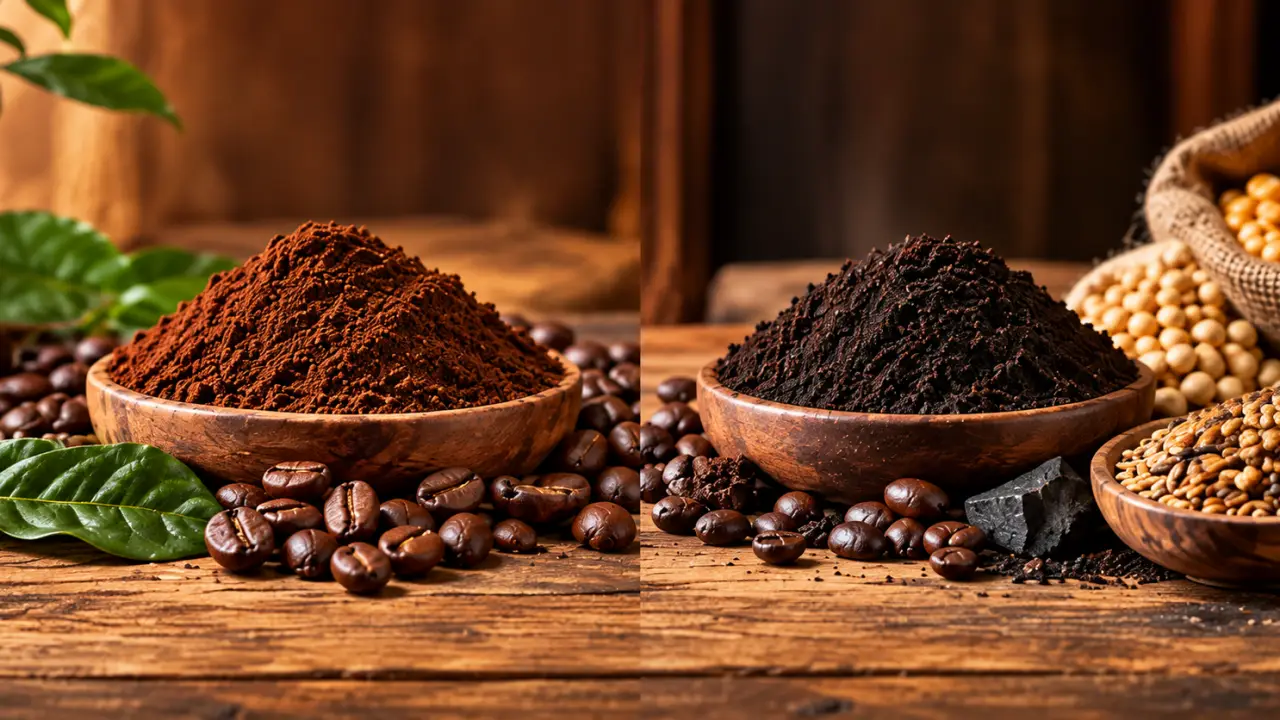
The table below summarizes some of the characteristics commonly used when comparing pure roasted coffee with adulterated coffee.
| Criteria | Pure Roasted and Ground Coffee | Low-Quality Adulterated Coffee |
|---|---|---|
| Ingredients | Coffee beans | May contain corn, soybeans, grains, or other ingredients |
| Aroma | Depends on the variety and roast level | May smell unusually strong or harsh if flavorings are used |
| Ground texture | Relatively loose | May feel heavier, damp, or sticky |
| Ground color | Varies with roast level | May appear unusual depending on the ingredients |
| Brewed color | Brown to dark brown | May appear cloudy or unusually colored |
| Thickness | Not excessively thick under normal brewing conditions | May be thicker depending on the added ingredients |
| Aftertaste | Characteristic of the bean variety and roast | May be harsh, cloying, or unusual |
| Verification | Ingredients + origin + product sample | Should not be judged by sensory characteristics alone |
What to Consider When Buying Pure Roasted Coffee for a Café
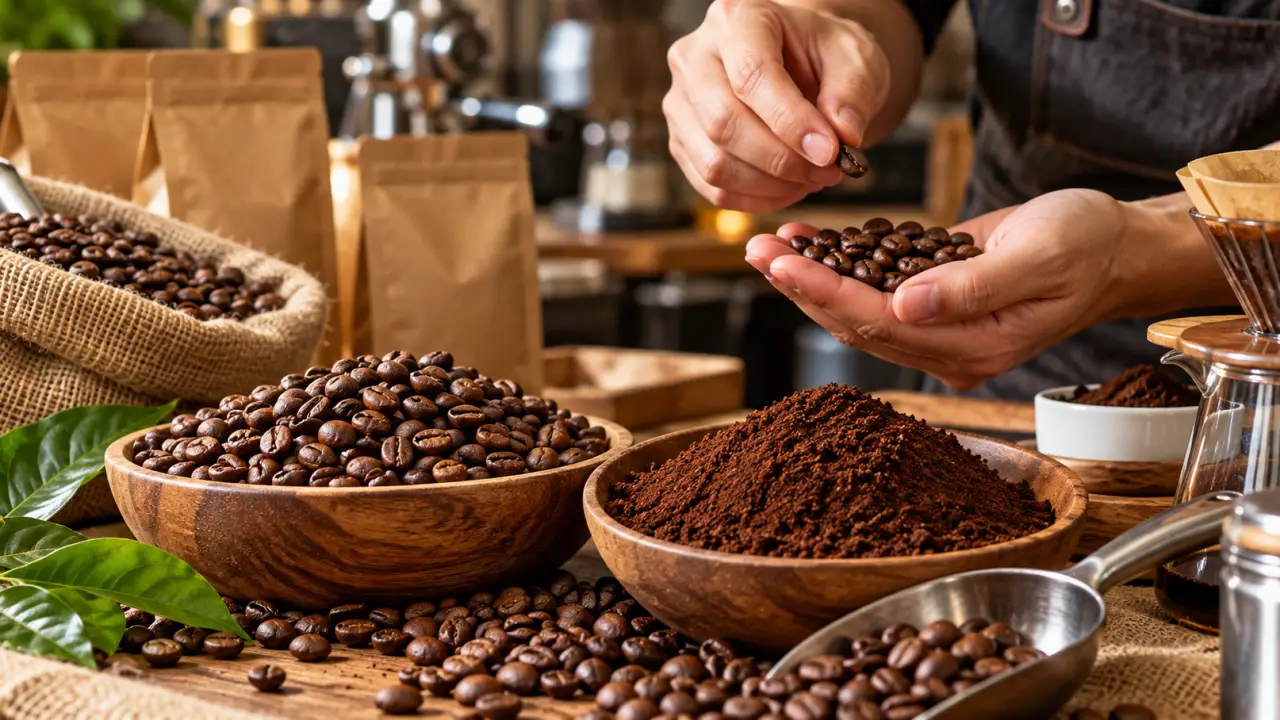
When buying pure roasted coffee for a café, do not rely only on color, aroma, or the intensity of the brewed coffee. Sensory evaluation is only the first step. More importantly, buyers should check how transparent the supplier is about the product.
Review the following information:
- Product ingredients;
- Whether the coffee is Robusta, Arabica, or a blend;
- Roast date;
- Origin of the raw coffee;
- Packaging specifications;
- Manufacturer information;
- Quality certifications, where available.
For bulk purchases, request a sample before placing a larger order. Brew it using the same recipe your café normally uses, then monitor consistency across multiple deliveries rather than evaluating only the first sample.
Purchasing volume should also match actual consumption. Store coffee in tightly sealed packaging and protect it from heat, moisture, and direct sunlight.
Common Misconceptions
When trying to identify pure roasted coffee, no single characteristic should be used to reach a final conclusion.
The darker the coffee, the purer it is: Incorrect. Color also depends on roast level.
The more bitter the coffee, the better it is: Incorrect. Harsh bitterness can result from over-roasting or improper extraction.
The more the grounds expand, the purer the coffee is: Not necessarily. Expansion is influenced by several other factors.
Oily beans mean the coffee has been coated or flavored: Not necessarily. Dark-roasted coffee can naturally develop surface oils.
A blend is adulterated coffee: Incorrect. A blend made entirely from different coffee beans can still be 100% pure roasted coffee.
Conclusion
There is no single sign that can definitively determine whether a product is pure roasted coffee.
Color, aroma, ground texture, behavior during brewing, and aftertaste can all provide useful initial clues, but they should be evaluated together with the ingredient list, origin information, and details provided by the manufacturer.
For café buyers, a safer approach is to work with a transparent supplier, request product samples, and monitor consistency across different batches. This is a much more reliable method of quality control than depending only on a few sensory tricks.
If you are looking for a source of pure roasted coffee for cafés, distributors, or other business needs, VILIFA offers coffee options for different taste profiles and applications. Contact VILIFA for product consultation, samples, and a solution that fits your actual purchasing needs.