
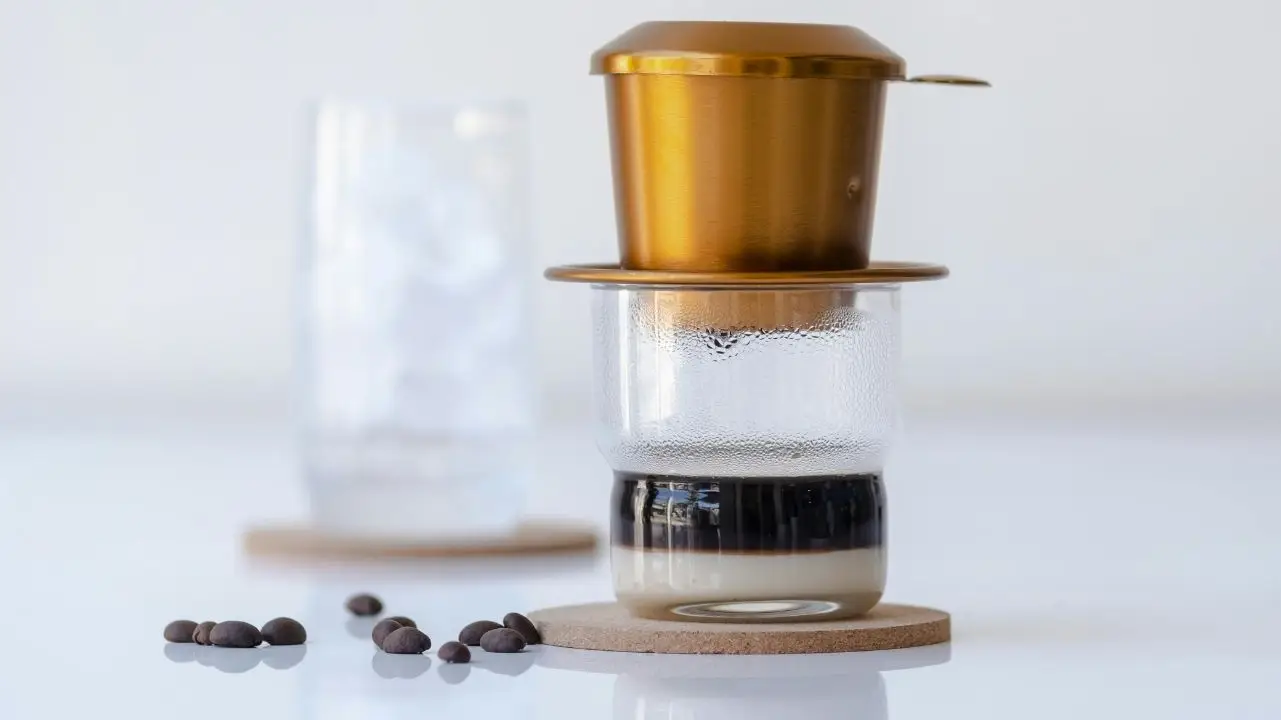

For many Vietnamese cafés, phin coffee remains an important part of the menu, especially in familiar drinks such as Vietnamese iced black coffee, iced coffee with condensed milk, and bac xiu. Choosing beans for phin coffee is therefore not simply about deciding which type “tastes better.” It also directly affects customer preferences, menu structure, consistency between orders, and the actual cost per cup.
So, what type of phin coffee for cafés is the right choice? Instead of looking only at the bean variety, cafés should start with customer preferences, core menu items, and actual day-to-day operations to determine the most suitable coffee.
What Criteria Should Cafés Consider When Choosing Phin Coffee?
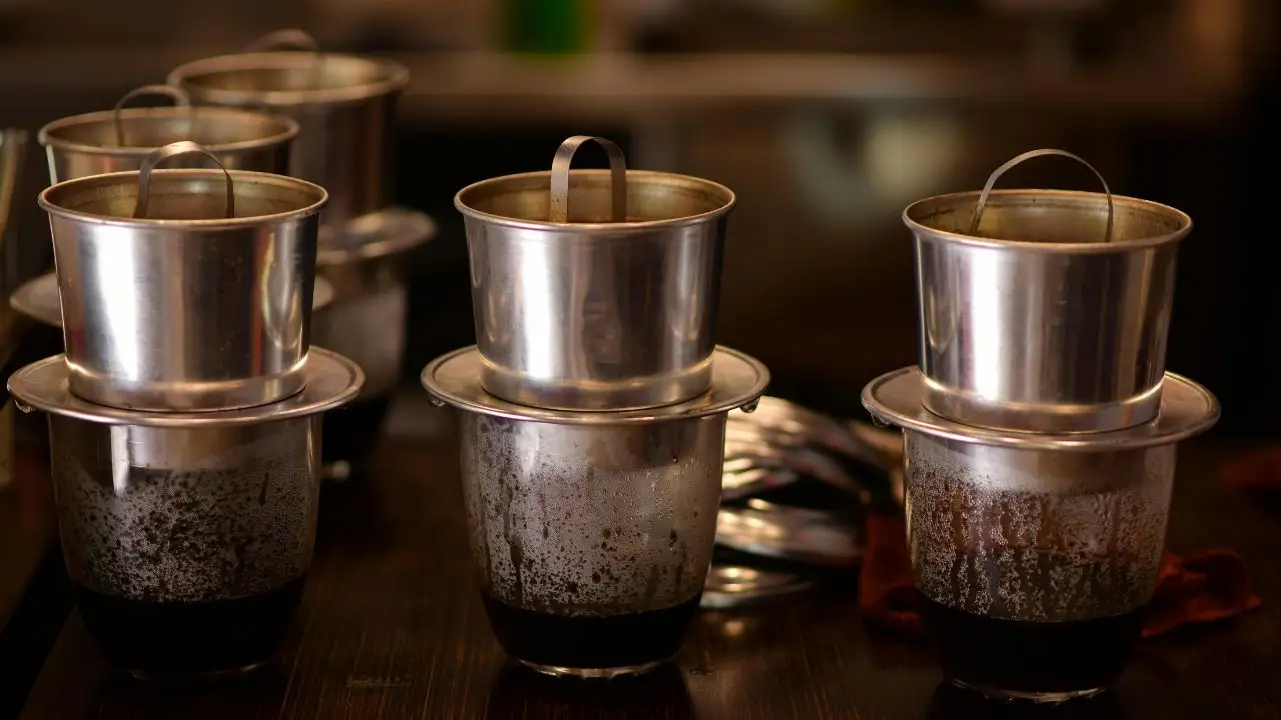
Before choosing between Robusta and a blend, a café should first define what kind of phin coffee it wants to serve.
If customers mainly order iced black coffee or iced coffee with condensed milk and are accustomed to a strong profile, the coffee base needs enough body to remain noticeable after milk, sugar, or ice is added. On the other hand, if customers prefer more aroma, a lighter finish, and a more balanced cup, a blend may be more suitable.
When choosing phin coffee for cafés, four factors should be considered together:
- The taste preferences of the main customer group;
- The proportion of black and milk-based coffee drinks on the menu;
- Consistency between bean lots and roast batches;
- The actual ingredient cost per cup.
A coffee with a lower price per kilogram is not necessarily more cost-effective if the café has to use a larger dose or frequently adjust the recipe because the quality is inconsistent.
What Beans and Roast Level Are Suitable for Phin Coffee?
Body and Intensity Need to Be Noticeable
Phin brewing is a slow extraction method. For drinks made with condensed milk or ice, the coffee base needs enough presence so that the finished drink still retains its aroma and flavor.
However, “strong” does not mean “harshly bitter.” A good cup of phin coffee should have a clear flavor structure, a pleasant finish, and a profile that suits the drink being served. If the bitterness is too harsh or a burnt sensation lingers, adding more milk only masks the problem rather than making the phin coffee better.
The Roast Level Should Match Customer Preferences
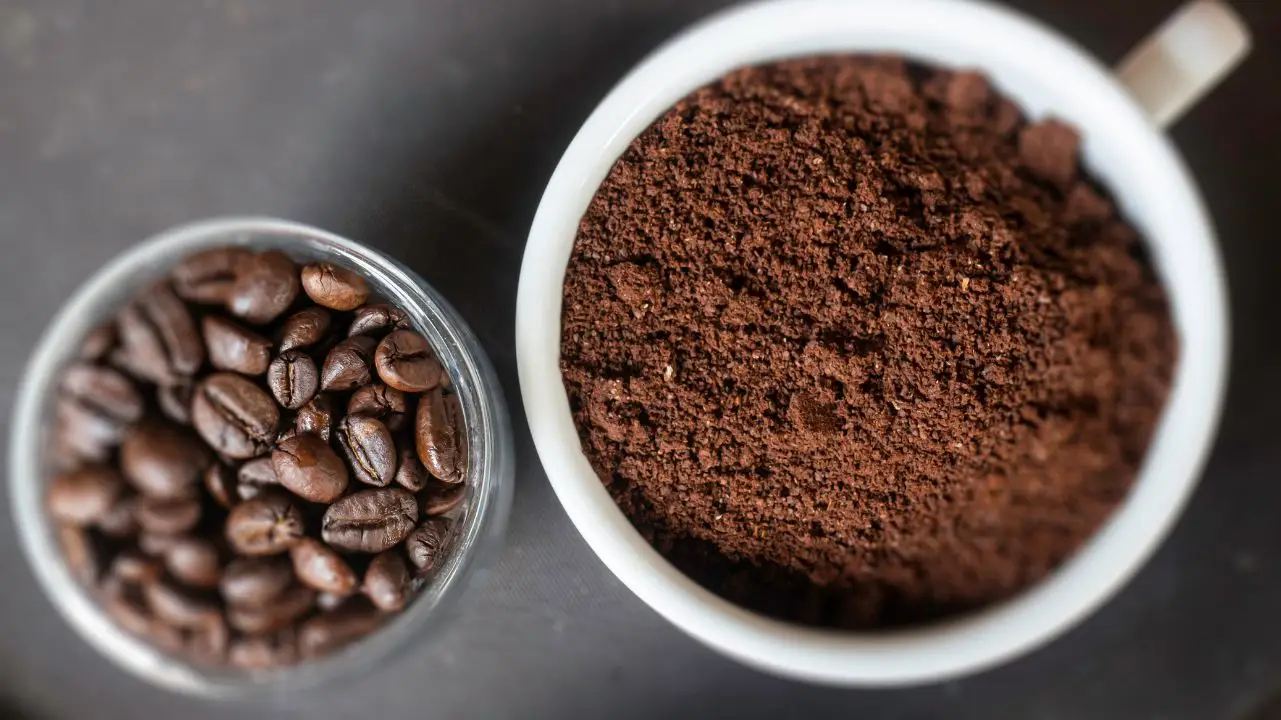
For traditional Vietnamese phin coffee, medium to medium-dark roasts are often a practical range to test because they can create noticeable body while still preserving some of the bean’s original aroma.
A roast that is too light may make the phin coffee taste thin if the recipe is not adjusted. On the other hand, roasting too dark may cause roast flavors and bitterness to overpower the characteristics of the beans.
There is no single “standard” roast level for every café. The roast should be tested using the same phin filter, water volume, milk, and ice used in actual service.
For cafés that want to build a more systematic coffee evaluation process, they can refer to the standards and coffee evaluation methods of the Specialty Coffee Association (SCA).
Grind Size Also Affects the Result
If the coffee is ground too finely, the flow rate may become too slow and the cup can feel heavy or harsh. If the grind is too coarse, water may pass through too quickly, resulting in a thinner cup.
Therefore, when switching to a new coffee, cafés should keep the grind size and brewing recipe consistent before evaluating quality.
What Are the Advantages of Robusta Roasted Without Additives for Phin Coffee?

Robusta is a familiar choice in many phin coffee recipes because of its noticeable body, strong flavor, and generally lower perceived acidity than Arabica.
Depending on the origin, processing method, and roast profile, Robusta can show deeper flavor notes such as cocoa, chocolate, roasted nuts, or caramel.
When Does Additive-Free Robusta Work Best?
Robusta is particularly suitable for cafés that:
- Sell a high volume of iced black coffee and iced coffee with condensed milk;
- Serve regular customers who prefer a strong coffee profile;
- Want the coffee base to remain noticeable when combined with milk;
- Need a recipe that is easy to maintain in daily operations.
For drinks containing milk and ice, the body of Robusta helps prevent the finished coffee from tasting too thin.
However, Robusta should not automatically be associated with either high or low quality. Final quality still depends on the green beans, processing method, roasting, freshness, and brewing technique.
How Is a Phin Coffee Blend Different from Robusta Roasted Without Additives?
A blend combines two or more coffee components to create a target flavor profile.
In a Robusta–Arabica blend, the two types of beans often complement each other.
Robusta can contribute:
- Body;
- Intensity;
- A strong flavor base;
- The ability to maintain flavor when milk is added.
Arabica can contribute:
- Aroma;
- A cleaner and lighter character;
- Perceived acidity;
- Greater depth in the finish.
This is also why, when discussing Arabica and Robusta, the question should not simply be which one is “more premium.” What matters more is the role each type plays in the drink the café is selling.
Is There a Standard Blend Ratio?
There is usually no single standard ratio that is suitable for every café.
Formulas such as 80:20, 70:30, or 50:50 Robusta–Arabica can be used as starting points for testing, but the result still depends on the quality of each type of bean and the way it is roasted.
Advantages of Using a Blend for Cafés
A more balanced and approachable flavor. A blend can reduce harsh bitterness and increase aroma, making it suitable for both regular customers and new customers. If your café serves a diverse customer base, this can be a safe choice.
Greater consistency across harvest seasons. Roasters can adjust the blend ratio to maintain a consistent flavor profile even when there are small differences in the raw materials between harvests. This is a major advantage compared with using a single origin.
Flexible across different menu items. A blend can be used for phin brewing, espresso machines, or cold brew. If the café has a diverse menu, using one type of coffee can also simplify inventory.
Easier to serve a broad customer base. Many cafés choose blends because they are considered a “safe” option for different customer groups. An article from Xưởng Cà Phê also recommends: “For cafés: a stable, easy-to-brew option that suits mainstream preferences.”
Comparing Additive-Free Robusta and Robusta–Arabica Blends for Phin Coffee
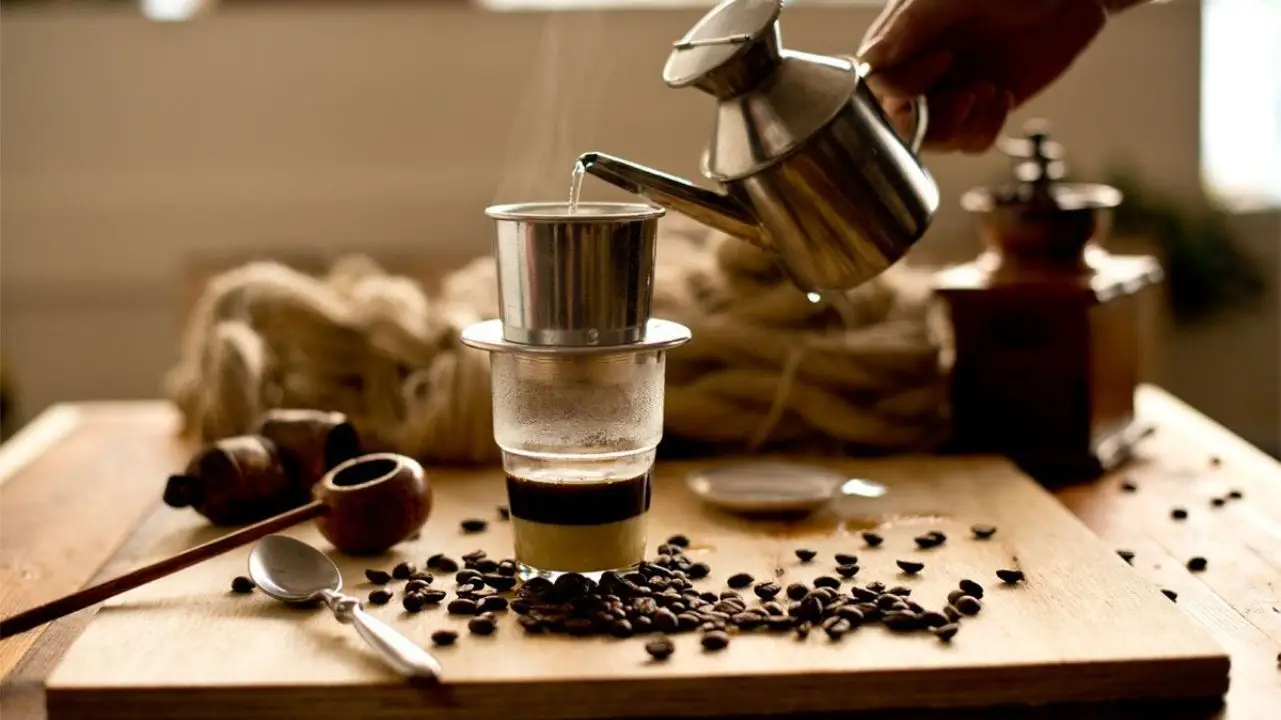
When comparing Robusta roasted without additives with a Robusta–Arabica blend for café use, the finished cup should be evaluated rather than relying only on the bean variety.
| Criteria | Robusta Roasted Without Additives | Robusta–Arabica Blend |
|---|---|---|
| Body | Usually clear and full | Flexible depending on the ratio |
| Intensity | Usually high | Can be adjusted |
| Aroma | Tends toward deeper flavor notes | Can be more diverse |
| Perceived acidity | Usually lower | Can be more noticeable |
| Iced coffee with condensed milk | Suitable for customers who prefer a strong profile | Works well if the blend has enough body |
| Black phin coffee | Suitable for customers who prefer strong coffee | Easier to create a balanced profile |
| Ability to fine-tune the profile | Lower | Higher |
| Consistency | Depends on raw materials and roasting | Can be adjusted through blending |
| Ingredient cost | Depends on bean quality | Depends on ratio and raw materials |
Robusta does not “beat” a blend, and a blend is not automatically better than Robusta.
Robusta is suitable when the café needs noticeable body and intensity. A blend is suitable when the goal is to balance strength, aroma, and the ability to build a distinctive house profile.
So, Should a Café Choose Robusta or a Blend for Phin Coffee?
Choose Robusta Roasted Without Additives If…
- The café specializes in phin coffee and regular customers prefer a strong traditional profile;
- You want to optimize ingredient costs;
- The menu focuses on iced black coffee and phin-brewed iced coffee with condensed milk, without requiring complex aromas;
- You want a fixed and consistent profile — one coffee that can be brewed the same way over time.
Choose a Blend If…
- The café serves different customer groups, including older customers, younger customers, and office workers;
- The menu includes both phin and espresso-based coffee, and you want to use the same beans to simplify inventory;
- You want phin coffee with a pleasant aroma rather than bitterness alone;
- You want phin coffee that is more aromatic and balanced than pure Robusta.
Common Misconceptions When Choosing Phin Coffee
The More Bitter, the Better
Bitterness is part of coffee, but harsh bitterness is not a measure of quality.
A good cup of phin coffee should have the right balance for the style the café wants to serve.
The Darker the Roast, the Better It Is for Phin
A dark roast can create a stronger impression, but roasting too deeply can also reduce the natural characteristics of the beans and create burnt flavors.
Arabica Is Always Better Than Robusta
This comparison lacks context.
When evaluating Robusta and Arabica, intended use is what matters. A lighter, more aromatic Arabica may not necessarily be suitable for iced coffee with condensed milk, while a Robusta with good body may sometimes provide a more suitable base.
Blend Means Adulterated Coffee
A blend is an intentional combination of coffees designed to achieve a specific flavor profile.
What cafés should pay attention to is the quality of the raw materials, whether the ingredients are transparent, and whether the flavor profile remains consistent between orders.
Bean Color Can Tell You the Quality
The color and surface shine of roasted beans reflect only part of the roast profile.
Coffee quality should not be judged by appearance alone.
What to Consider When Choosing a Phin Coffee Supplier for Your Café
Coffee Roasted Without Additives vs. Flavored Roasting — Understand the Difference
Coffee roasted without additives means the beans are simply roasted, without added butter, flavorings, or other additives.
Flavored roasting involves adding butter and flavorings to create aroma. This practice is common in the market, but it is not what is usually referred to as “clean coffee.”
Cafés that want to build a sustainable brand should consider coffee roasted without additives. Customers are increasingly interested in coffee origin and purity, and a cup of phin coffee without added butter or flavorings can become a point of differentiation from nearby cafés.
In addition to the roasting method, the origin of the raw materials is also worth considering. Cafés can learn more about Bao Loc coffee and the characteristics of its Robusta-growing region to gain additional context when selecting coffee beans.
Wholesale Policy and Samples
Wholesale purchases starting from 5 kg are a common entry point.
Request a sample before committing to regular monthly orders. This allows you to check the quality before making a long-term commitment.
Check certifications such as ISO or HACCP where available. This can be particularly important if the café serves international customers or wants to build a more professional brand image.
Storage to Maintain Quality
Purchase an amount that can reasonably be used within two to four weeks.
Roasted and ground coffee loses aroma quickly after the bag is opened. Buying larger quantities to obtain a better wholesale price can be counterproductive if the coffee is not stored properly.
Keep the coffee tightly sealed and protected from moisture and sunlight. Avoid exposing it to air for too long, as this can reduce aroma and oxidize the coffee oils.
Conclusion
Both Robusta roasted without additives and blends can produce good phin coffee for cafés, but they are suited to different goals.
Robusta provides strong intensity, lower ingredient cost, and a stable traditional profile. A blend provides greater balance, flexibility, and the ability to serve a more diverse customer base.
There is no single “best” choice — only the choice that best fits your café’s menu and customers.
Start by asking:
How do my customers drink phin coffee? Do they prefer strong or balanced flavors? Do they drink black coffee or coffee with milk? And most importantly, how much profit do I need from each cup for the café to operate sustainably?
Once you can answer those questions, you will know whether Robusta roasted without additives or a blend is the better choice for your café.
Frequently Asked Questions
Should a Newly Opened Café Choose Robusta or a Blend?
A 90/10 or 80/20 blend is a safe starting point. After one to two months, adjust the ratio based on customer preferences.
Is a 90/10 Blend Strong Enough for Iced Coffee with Condensed Milk?
Yes. If the drink uses a lot of milk and ice, increase the coffee dose to 25–28 g per cup.
Does Coffee Roasted Without Additives Taste Weak When Milk Is Added?
No. Whether the drink tastes weak depends on the type of beans and the dose, not on the roasting method itself.
Should Cafés Change Their Phin Coffee by Season?
No. Ask the roaster to maintain a consistent profile across different harvest seasons.
Where Should Cafés Buy Wholesale Coffee?
Choose a roaster with direct access to the growing region, request samples, and check ISO/HACCP certifications.