
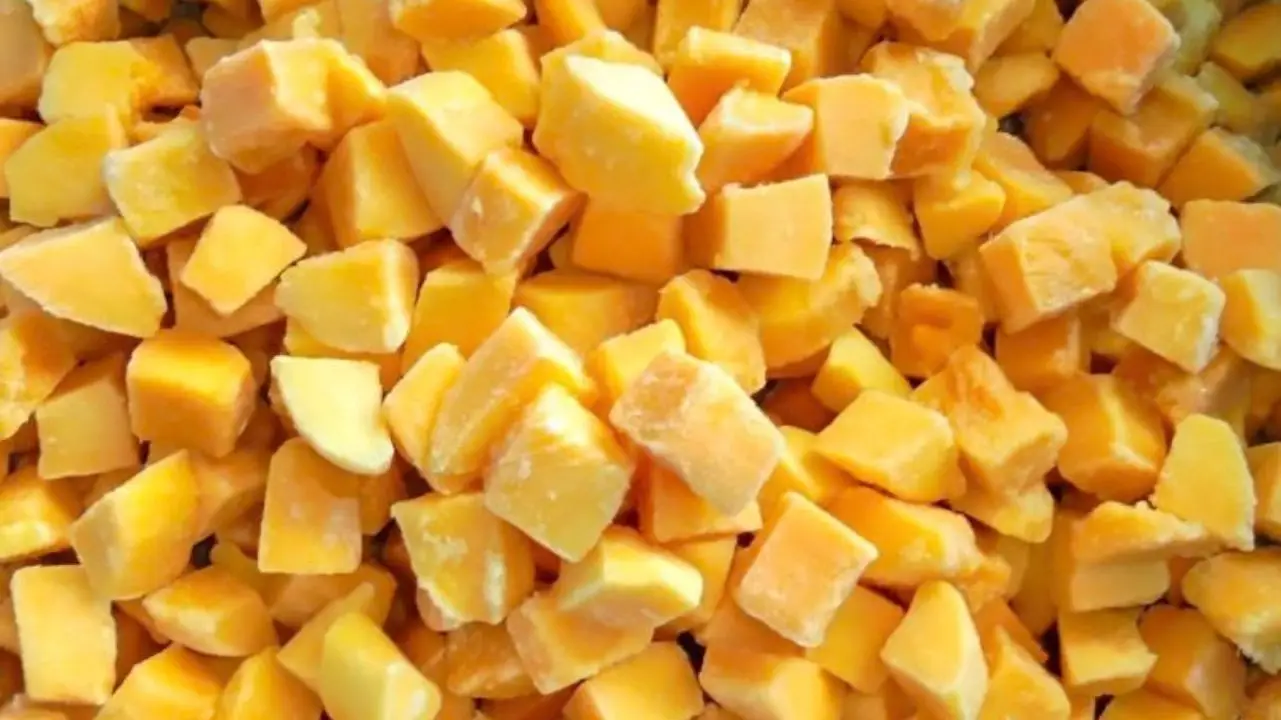

When buying wholesale frozen mango, price is only one part of the supplier selection process. For distributors, importers, food businesses, or manufacturers using mango as an ingredient, a more important question is whether the supplier can maintain consistent quality, specifications, and delivery schedules across multiple batches.
A reliable frozen mango supplier should have strong capabilities in raw material sourcing, freezing technology, quality control, order coordination, and documentation. Careful evaluation from the beginning can help businesses reduce the risk of inconsistent products, incorrect cut sizes, supply shortages, or delivery delays.
Below are five important criteria to consider before purchasing frozen mango in bulk.
1. Check the Documents and Certifications of the Frozen Mango Supplier
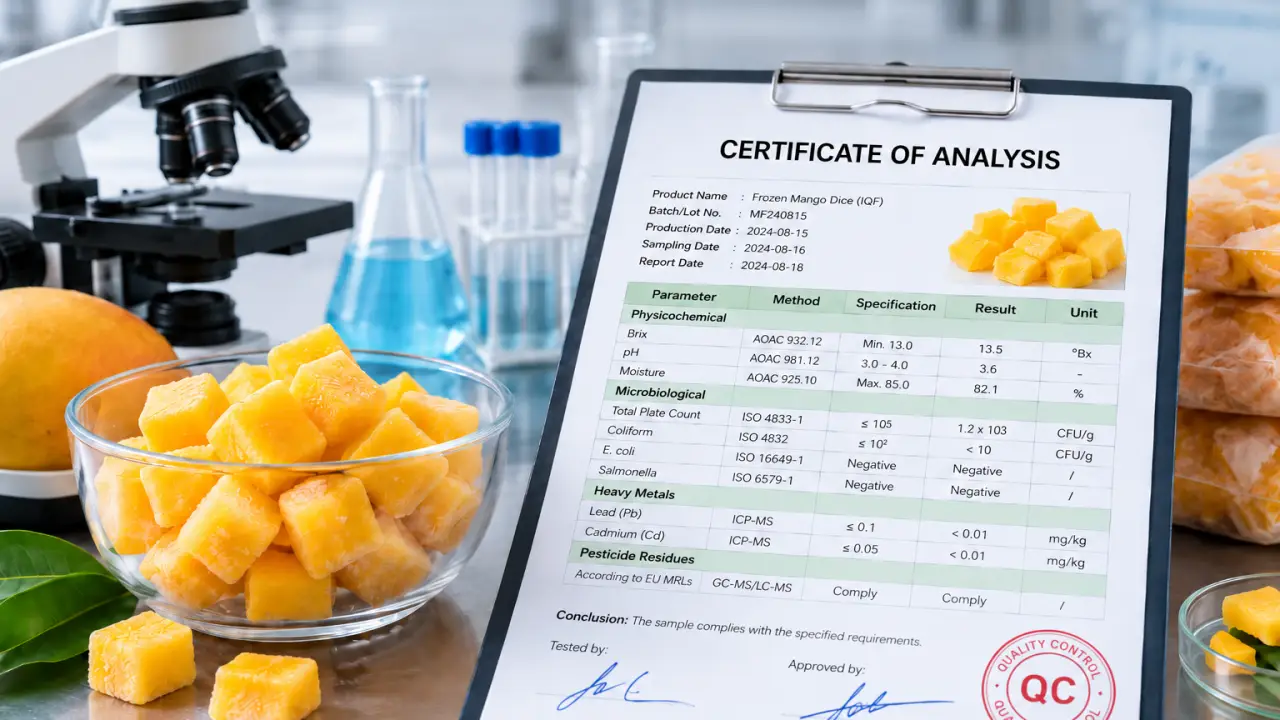
Before comparing quotations, businesses should first determine whether the supplier can meet the food safety and documentation requirements of the target market.
Depending on the customer and importing country, the processing facility may apply management systems such as HACCP, FSSC 22000, BRCGS, ISO 22000, or other certifications required by the buyer.
It is not enough to simply ask whether a supplier “has certifications.” More importantly, businesses should check whether:
- The certificates are still valid;
- The certification scope covers the relevant production activities;
- The factory name and address match the actual manufacturing facility;
- The supplier can provide traceability records when required.
Some markets or customers may also have specific requirements related to growing areas, processing facilities, or factory registration. These requirements should therefore be clarified during the quotation stage rather than after production has already started.
2. Evaluate IQF Frozen Mango Production Capability
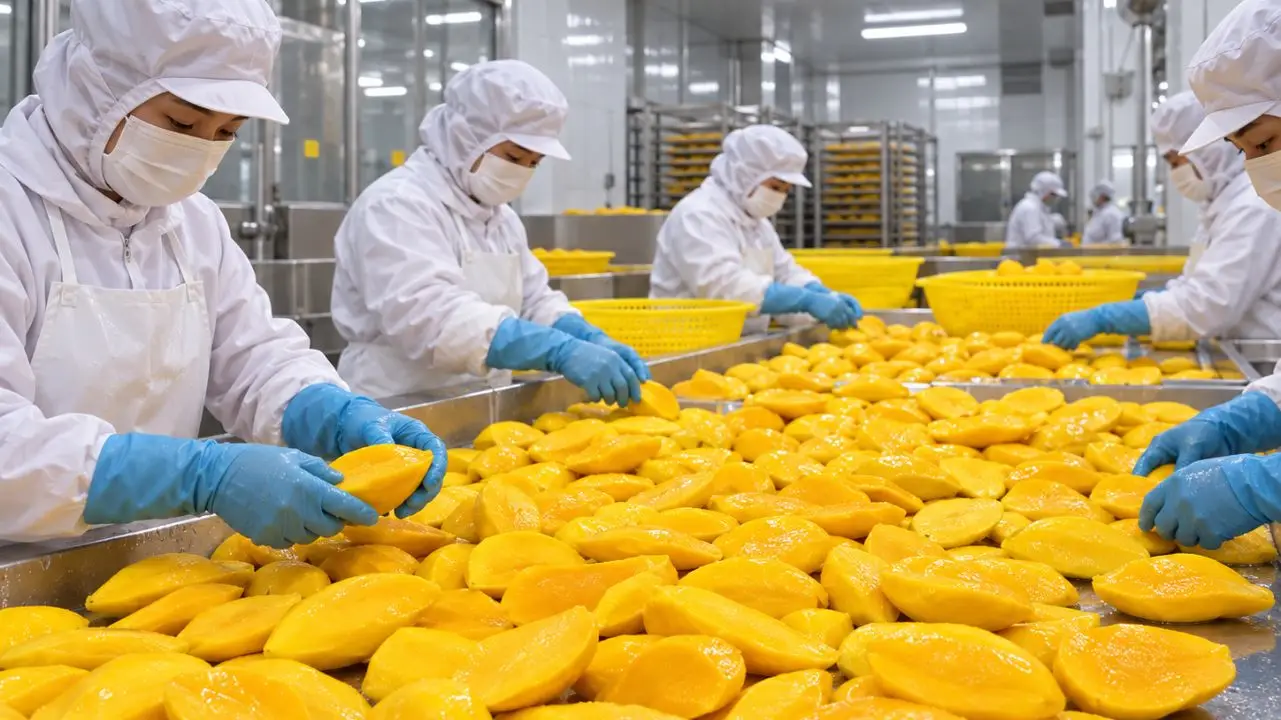
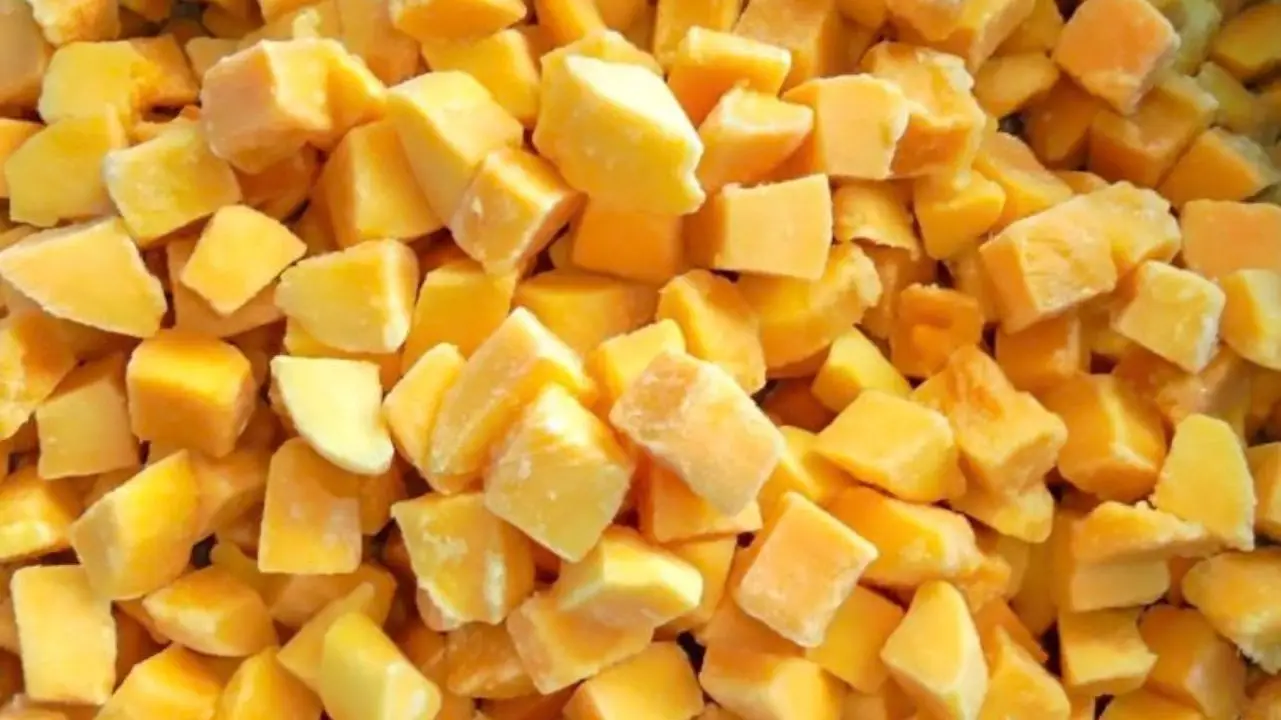
For cut mango products, IQF stands for Individual Quick Freezing, a freezing method in which individual mango pieces are rapidly frozen separately.
This helps reduce clumping and makes the product easier to portion, prepare, or feed into food-processing lines.
When sourcing IQF frozen mango, businesses should not only ask whether the factory uses IQF technology but also evaluate several specific production factors.
Is the Cut Size Consistent?
Frozen mango can be supplied in different formats, including:
- Dices;
- Cubes or chunks;
- Slices;
- Mango cheeks or larger pieces.
If a specific size is required, such as 10 × 10 mm dices, this requirement should be clearly stated in the product specification and confirmed with an approved sample before placing a large order.
Consistent sizing is particularly important for businesses using frozen mango in beverages, bakery products, ice cream, yogurt, or automated food-processing lines.
Check the Entire Cold Chain
Frozen mango quality does not depend only on the freezing stage.
Businesses should also consider:
- The time between processing and freezing;
- Cold-storage conditions;
- Loading procedures;
- Waiting time before transportation;
- The ability to maintain the required temperature throughout delivery.
If the cold chain is interrupted, frozen mango may experience changes in texture, color, or condition after thawing, even if the product was initially processed correctly.
Clarify Glazing and Actual Net Weight
Some frozen products may use glazing, which is a thin layer of frozen water applied to the surface to help protect the product during storage.
If glazing is used, both parties should clearly agree on:
- Glazing percentage;
- Net weight;
- Gross weight;
- The method used to determine the actual product weight.
This is especially important when comparing wholesale frozen mango prices, because two quotations are only truly comparable when the product specifications and actual mango content are the same.
3. Review the Quality Management System
A stable supplier should be able to do more than provide one attractive sample. What matters more is whether the supplier can maintain reasonably consistent quality across multiple production batches.
Raw Material Control
Businesses should ask:
- Where the mangoes are sourced from;
- Whether the raw material supply is stable;
- What ripeness criteria are used;
- How non-conforming fruit is removed;
- Whether each lot can be traced.
Parameters such as sweetness, ripeness, color, and flesh firmness should be agreed according to the mango variety and intended application rather than applying one fixed value to every product.
Control During Processing
Businesses may also review production steps such as:
- Raw material receiving and grading;
- Washing;
- Peeling;
- Cutting;
- Anti-browning treatment, if used;
- Freezing;
- Foreign-material control;
- Metal detection;
- Packaging.
The way a factory manages each processing stage provides useful insight into its actual ability to maintain product quality.
Check the Finished Product Before Buying in Bulk
Before purchasing wholesale frozen mango, businesses should request appropriate supporting documents and samples, such as:
- Product Specification;
- Physical sample;
- Certificate of Analysis (COA);
- Test results according to the factory’s quality-control plan;
- Information from recent batches where needed to evaluate consistency.
For large orders or projects with strict quality requirements, businesses may also consider independent sample testing before entering into a long-term purchasing agreement.
4. Evaluate Long-Term Supply Capability
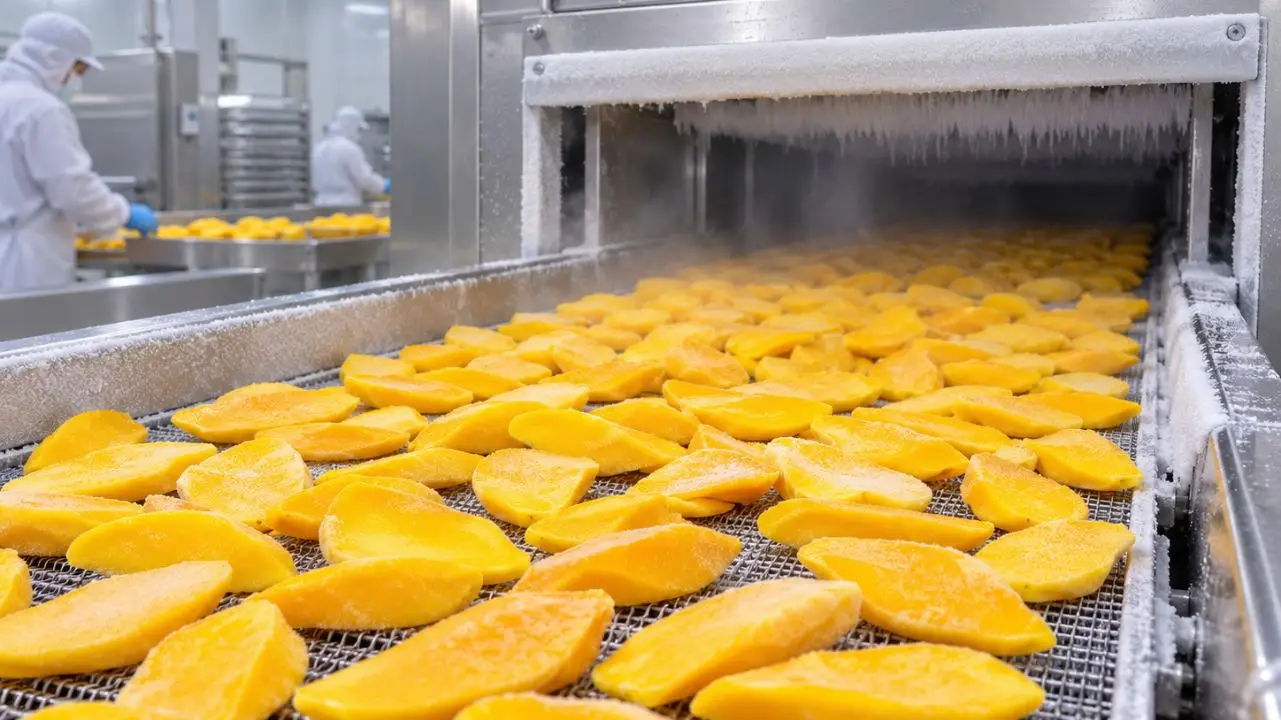
Mango is an agricultural product influenced by variety, growing region, seasonality, and weather conditions. A good frozen mango supply source therefore needs more than just available stock at the present time; it should also have the ability to maintain supply over the longer term.
Businesses should ask about:
- Whether the factory sources mangoes from one or multiple growing regions;
- Actual production capacity;
- Cold-storage capacity;
- Finished-goods inventory capability;
- Lead time;
- Minimum Order Quantity.
Minimum Order Quantity, commonly referred to as MOQ, is the smallest quantity a supplier is willing to accept for one order.
When working with a new supplier, businesses can also ask whether trial orders or Less than Container Load shipments are possible.
This approach may help reduce sourcing risk during the supplier evaluation stage.
5. Evaluate Order Coordination and Documentation Capability
In B2B transactions, even a good product can create operational problems if the supplier responds slowly, provides unclear updates, or frequently makes mistakes in documentation.
When working with a new frozen mango supplier, businesses should observe:
- Response time to quotation requests;
- Ability to understand technical requirements;
- Sample preparation time;
- Accuracy of quotations and order confirmations;
- Ability to provide production updates;
- Proactiveness when changes occur.
For export orders, the required document set depends on the destination market and agreed shipping terms. Common documents may include:
- Commercial Invoice;
- Packing List;
- Bill of Lading;
- Certificate of Origin;
- Health Certificate, where required;
- Phytosanitary Certificate, where applicable;
- Other documents required by the importing country.
A supplier familiar with export documentation can help reduce processing time and the risk of issues during customs clearance and delivery.
For shipments to the United States, businesses should carefully review the official U.S. food import requirements before finalizing documentation and shipping arrangements. The original article links to this FDA resource.
Quick Checklist for Choosing a Frozen Mango Supplier
| Area | What to Check |
|---|---|
| Documentation | Certifications, company information, production scope |
| Product | Cut format, dimensions, packaging, net weight |
| Technology | IQF freezing capability, cold storage, cold chain |
| Quality | Samples, product specifications, COA or testing when required |
| Supply | Growing areas, production capacity, inventory capability |
| Orders | MOQ, trial orders, container consolidation options |
| Documents | Ability to prepare complete and accurate documents for the target market |
Should You Depend on Only One Frozen Mango Supplier?
If a business uses frozen mango regularly, maintaining a backup supply source is worth considering.
This does not mean production volume must be divided equally among several suppliers. The purpose is to have an alternative supplier that has already been evaluated before the primary source faces problems related to raw materials, production capacity, or transportation.
A backup source can also help businesses:
- Compare product quality;
- Monitor market prices;
- Respond more effectively to changes in raw material availability;
- Reduce the risk of interruptions to production or distribution.
Conclusion
When buying wholesale frozen mango, the lowest price is not necessarily the best option if quality varies between batches, specifications are inconsistent, or delivery schedules frequently change.
A suitable supply source should be evaluated comprehensively, from raw materials and IQF frozen mango processing technology to quality control, delivery capability, and documentation management.
When working with a new frozen mango supplier, businesses should clearly define product requirements, evaluate samples, and begin with an appropriate order quantity before scaling up. This approach helps buyers assess the supplier’s actual capabilities and gradually build a stable frozen mango supply for distribution, food processing, or export.
Currently, VILIFA supplies two frozen mango product lines: frozen Cat Chu mango and frozen Keo mango, suitable for distribution, food processing, beverage production, and B2B orders. Depending on buyer requirements, product cut, packaging specifications, samples, and supply arrangements can be discussed before ordering.
If you are looking for a wholesale frozen mango source, contact VILIFA for product information, packaging specifications, and a wholesale quotation based on your required order volume.