

Some fruits are instantly recognizable by their appearance, but durian leaves an impression long before it is opened. Its unmistakable aroma can fill the surrounding air, while the flesh inside offers a rich combination of sweetness, creaminess, and softness.
In Vietnam, durian does not have just one flavor or texture. Ri6 delivers a different eating experience from Monthong, while local varieties have characteristics of their own. From the orchards of the Mekong Delta to the highlands of Central Vietnam, growing conditions and harvest seasons contribute to the diversity of Vietnamese durian.
Today, this tropical fruit is enjoyed fresh and used in ice cream, cakes, beverages, and various processed food products.
What Makes Vietnamese Durian Special?
The first thing many people notice about durian fruit is its thick, thorn-covered husk. Yet the part that matters most lies inside, where the edible flesh varies in color, consistency, and aroma depending on the variety.
The appeal of Vietnamese durian goes beyond sweetness. Its rich texture plays an equally important role in the eating experience. Some varieties have firm, custard-like flesh, while others are softer and melt more readily in the mouth.
Its aroma is another distinguishing feature. Longtime durian enthusiasts may recognize different aromatic notes, whereas first-time consumers may find the smell unusually intense.
This is why choosing a good durian often comes down to personal preference. Someone who enjoys a bold, creamy flavor may prefer a different variety from someone looking for a milder aroma and firmer texture.
These differences also allow food manufacturers to select durian ingredients based on the requirements of individual recipes rather than using one variety for every application.
Where Does Durian Originally Come From?
To understand the origins of durian, it is useful to look at the tropical forests of Southeast Asia. Botanical references identify Sumatra and Borneo as part of the natural distribution area of Durio zibethinus, the species most widely cultivated for commercial fruit production.
Over time, durian developed from a native tropical fruit into an important agricultural crop across several Southeast Asian countries. Varieties with desirable characteristics were selected, propagated, and introduced to new growing regions.
In Vietnam, durian cultivation has a long history in the southern provinces. Production gradually expanded from established fruit-growing areas into regions capable of supporting larger commercial orchards.
Today, the Mekong Delta, southeastern Vietnam, and the Central Highlands are important areas of Vietnam durian cultivation.
The development of the industry involves more than expanding orchard acreage. Variety selection, harvesting practices, post-harvest handling, and processed fruit production have also become increasingly important.
Popular Vietnamese Durian Varieties
For many buyers, the variety is one of the first things to consider when choosing durian. Each type can differ in sweetness, richness, flesh consistency, and aroma.
Among the Vietnamese durian varieties available commercially, Ri6 and Monthong are particularly well known. Local varieties also remain part of Vietnam’s diverse durian market.
Ri6 Durian – A Choice for Those Who Enjoy Rich Flavor
For consumers who appreciate a pronounced durian taste, Ri6 durian is often worth considering.
One of its noticeable characteristics is the relatively deep yellow color of the flesh. The texture tends to be dense and creamy, offering a rich mouthfeel when the fruit reaches an appropriate stage of ripeness.
However, not every Ri6 fruit delivers exactly the same experience. Harvest timing, growing conditions, and post-harvest ripening can all influence sweetness, softness, and aroma.
In food processing, Ri6 can be considered for recipes where a distinctive durian flavor is important, including ice cream, pastries, and dessert fillings.
Commercial buyers should still assess actual product samples before selecting a particular batch for manufacturing.
Monthong Durian (Dona) – Known for Its Thick Flesh and Texture
While Ri6 is often associated with a more pronounced taste, Monthong durian appeals to buyers seeking a different balance of texture and flavor.
Monthong originated in Thailand and was subsequently introduced into commercial cultivation in Vietnam. In the domestic market, it is also commonly known as Dona durian.
Compared with Ri6, Monthong generally has lighter yellow flesh and a relatively firm texture when properly ripened. Its aroma is often perceived as milder, although the actual characteristics vary between individual fruits.
For food manufacturers, Monthong may be suitable for applications requiring thicker flesh or particular textural properties.
Whether intended for fresh consumption or further processing, fruit maturity and actual product quality matter more than the variety name alone.
Cai Mon Durian and Other Local Varieties
Besides internationally recognized commercial varieties, durian is closely associated with traditional fruit-growing communities in southern Vietnam.
Cai Mon, in Ben Tre, is one of the locations known for its long-established fruit orchards. However, the name “Cai Mon durian” may refer to fruit associated with the growing area rather than one clearly defined botanical variety.
Other locally recognized types include Chuong Bo and Kho Qua durian, each contributing to the diversity of the domestic market.
When exploring Vietnamese durian varieties, buyers should consider their intended application instead of assuming that one variety is universally superior.
For processors, the most suitable durian is the one offering the desired flavor, texture, and consistent quality for the finished product.
When Is Durian Season in Vietnam?
There is no single harvesting period that applies to every growing region. The durian season in Vietnam varies according to local weather conditions, cultivation practices, and flowering patterns.
In the Mekong Delta, the main harvest generally falls between April and June. Some orchards may produce fruit outside this period through appropriate cultivation and flowering management.
In the Central Highlands, harvesting usually takes place later, with the main season commonly occurring between July and October.
These regional differences help extend the availability of Vietnamese durian throughout the year.
However, extended availability does not mean that supply volume, fruit quality, and market prices remain unchanged from month to month.
For businesses purchasing durian in commercial quantities, understanding regional harvest schedules can support better sourcing, inventory planning, and processing decisions.
What Is the Nutritional Value of Durian Fruit?
Beyond its distinctive taste, durian fruit provides carbohydrates, dietary fiber, and several vitamins and minerals, including B vitamins and potassium.
Carbohydrates contribute to the fruit’s energy content, while dietary fiber supports normal digestive function. Vitamins and minerals are involved in various physiological processes.
However, the nutritional composition of durian can vary depending on the variety, ripeness, and serving size.
Durian is relatively energy-dense compared with many other fresh fruits. Therefore, portion sizes should be considered, particularly by individuals monitoring their calorie or carbohydrate intake.
From a durian nutrition perspective, the fruit can be included as part of a varied diet, but it should not be treated as a medicinal food or a substitute for other important food groups.
What Can You Make with Vietnamese Durian?
Fresh durian is popular on its own, but its creamy consistency also makes it suitable for a wide range of desserts and beverages.
Depending on the recipe, the flesh can be served in segments, mashed, blended, or combined with milk and other ingredients.
Enjoying Fresh Durian
Eating ripe durian directly is one of the simplest ways to appreciate the differences between varieties.
Consumers who enjoy a stronger flavor may prefer Ri6, while those seeking thicker flesh and a comparatively milder aroma may choose Monthong.
The eating experience also depends on fruit maturity and how the durian has been handled after harvesting.
Making Durian Ice Cream, Cakes, and Desserts
Vietnamese durian is used in ice cream, crepes, mousse cakes, sweet soups, and various pastry fillings.
For ice cream, the flesh is commonly blended with milk, whipping cream, or coconut milk. The proportions of these ingredients influence the sweetness, richness, and final texture.
Home cooks can also explore different preparation methods depending on the ingredients available.
For more ideas, see VILIFA’s article on three easy homemade durian ice cream recipes.
Using Durian in Beverages
Durian can be blended with milk or other ingredients to create rich, tropical beverages.
For cafes and food manufacturers, using pre-processed durian flesh or puree can reduce preparation time and make ingredient measurements more consistent.
These applications demonstrate the versatility of Vietnamese durian beyond fresh fruit consumption.
Frozen Durian and Its Applications in Food Processing
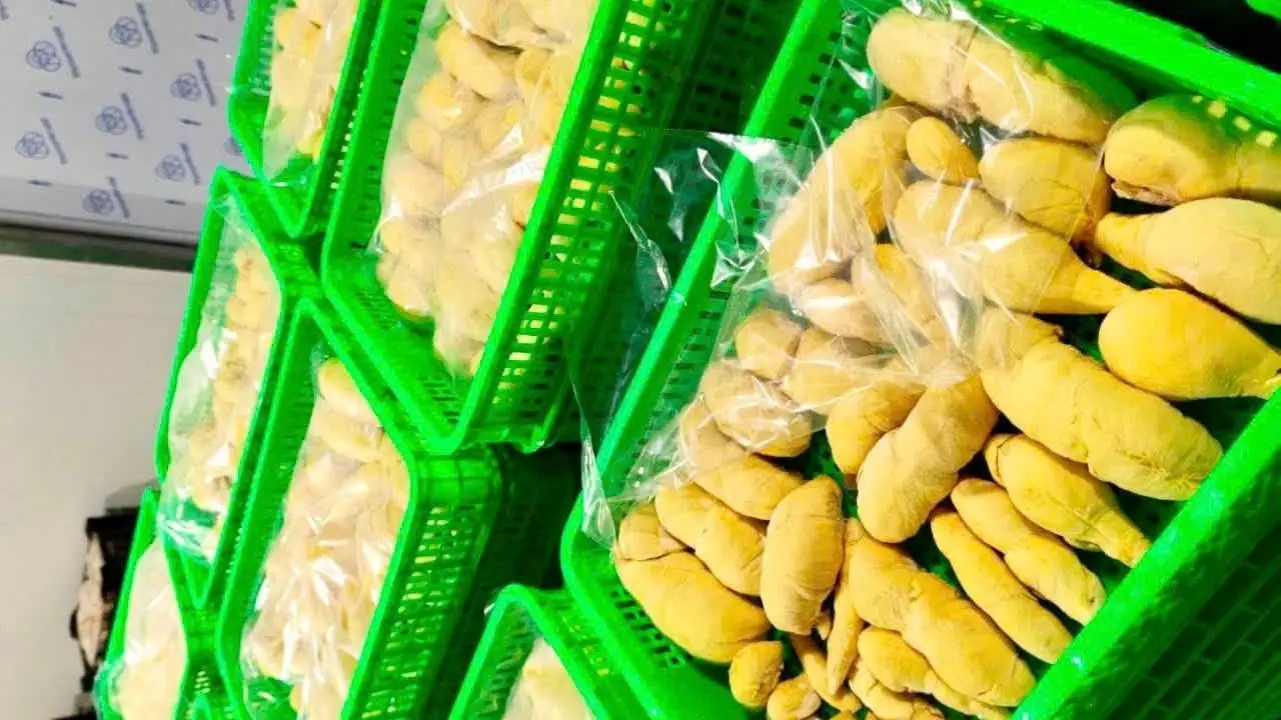
As manufacturers look for ingredients that can be used beyond the fresh harvest season, frozen durian becomes a practical sourcing option.
Instead of processing whole fruit at the production facility, businesses can select seedless durian flesh, frozen segments, or puree depending on their recipes.
Whole flesh segments may be more appropriate for products requiring recognizable pieces of durian. Puree, meanwhile, is convenient for ice cream, bakery fillings, and beverages that require a uniform mixture.
Using frozen ingredients can also support production planning and reduce preparation work.
However, the quality of frozen Vietnamese durian depends on the original fruit maturity, freezing method, packaging, and storage conditions.
Texture, moisture, and aroma may change after thawing. Therefore, businesses sourcing frozen durian from Vietnam should assess product samples and technical specifications before placing large orders.
For food manufacturers, bakeries, and beverage businesses, VILIFA can provide information about available frozen durian ingredients and potential supply arrangements.
Vietnamese Durian in International Export Markets
The growth of international trade has created additional opportunities for Vietnam’s durian industry.
Alongside fresh fruit shipments, processed durian products are attracting attention because they can meet different commercial and manufacturing requirements.
This development established a formal trading route for a specific category of processed durian.
However, successful Vietnam durian exports depend on more than market demand.
Exporters must comply with applicable requirements relating to traceability, processing facilities, inspections, and food safety.
For frozen products, maintaining reliable temperature control throughout storage and transportation is equally important.
These considerations are essential for businesses seeking consistent product quality across international shipments.
How to Choose Vietnamese Durian for Food Manufacturing
For commercial buyers, selecting durian ingredients should begin with the requirements of the final product.
An ice cream manufacturer may prioritize strong aroma, creamy consistency, and smooth blending performance. A bakery producing desserts with visible durian pieces may have different expectations regarding flesh firmness and appearance.
In addition to variety selection, buyers should assess ripeness, color, flavor, packaging format, and storage requirements.
For frozen durian ingredients, texture after thawing and consistency between batches are also important.
Businesses looking for a durian supplier in Vietnam should request relevant product specifications and samples before finalizing procurement arrangements.
VILIFA can provide information about Vietnamese durian products, available processing formats, and supply options based on specific business requirements.
Conclusion
Vietnamese durian stands out for its variety of flavors, textures, and culinary applications. Ri6, Monthong, and locally cultivated varieties offer different characteristics that appeal to both consumers and food manufacturers.
Beyond fresh consumption, durian has become a valuable ingredient for ice cream, desserts, beverages, and frozen food products.
For businesses sourcing durian ingredients for manufacturing, distribution, or international trade, VILIFA can provide further product information and discuss potential sourcing arrangements.
Contact VILIFA to explore Vietnamese durian ingredients suitable for your business needs.